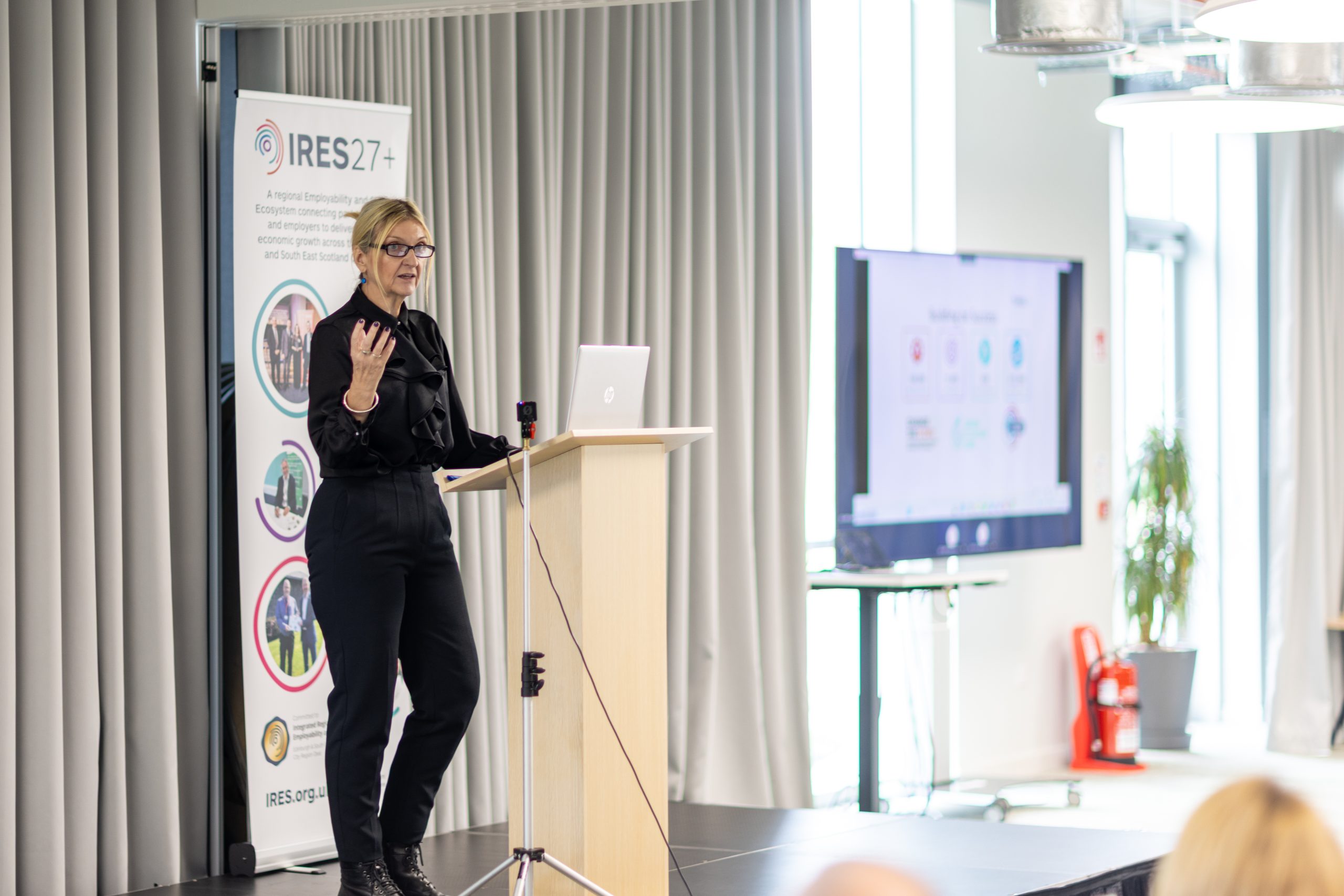
Skills, employability and inclusive economic growth are challenges that no single organisation can address alone. That spirit of collaboration was at the heart of the recent Integrated Regional Employability and Skills (IRES27+) event at Fife College’s Dunfermline City Campus, which brought together partners from across Edinburgh and South East Scotland to reflect on progress, share learning and shape the next phase of regional activity.
With 89 attendees representing around 40 organisations, the event demonstrated the scale of commitment across the region to creating a more responsive, inclusive and effective skills and employability system. Representatives from industry, the third sector, local authorities, colleges, universities and regional partnerships came together around a shared ambition: ensuring individuals and employers have access to the support, opportunities and skills needed to thrive.
A key focus of the event was reflecting on the impact of the Integrated Regional Employability and Skills programme to date, while looking ahead to the ambitions of IRES27+.
Attendees heard about the Programme Proposal, which has been shaped by contributions from more than 180 partners across the region. The event also explored findings from the independent critical review, providing valuable insights into what has been achieved so far and where future opportunities lie.
Discussions highlighted the importance of building on strong foundations while continuing to adapt to changing economic conditions, workforce demands and learner needs.
The event also showcased several important initiatives that are helping to strengthen the region’s skills ecosystem.
These included updates on the Housing, Construction & Infrastructure Skills Gateway (HCI Skills Gateway), which is helping to support workforce development within key sectors, and the introduction of the Building Equity, Accessibility and Connecting Opportunities Network (BEACON).
While each initiative has its own objectives, they share a common purpose: helping people access opportunities, supporting employers to meet skills needs and ensuring that economic growth can be both inclusive and sustainable.
One of the strongest messages from the day was the value of partnership working.
Throughout presentations and discussions, a clear theme emerged: meaningful change happens when organisations work together. IRES27+ demonstrates the value of strong relationships, effective networks and shared infrastructure, enabling partners to respond collectively to challenges and opportunities across the region.
This collaborative approach helps create clearer pathways into education, training and employment, supports progression into higher-skilled and better-paid work, and contributes to wider efforts to tackle poverty and inequality across the region.
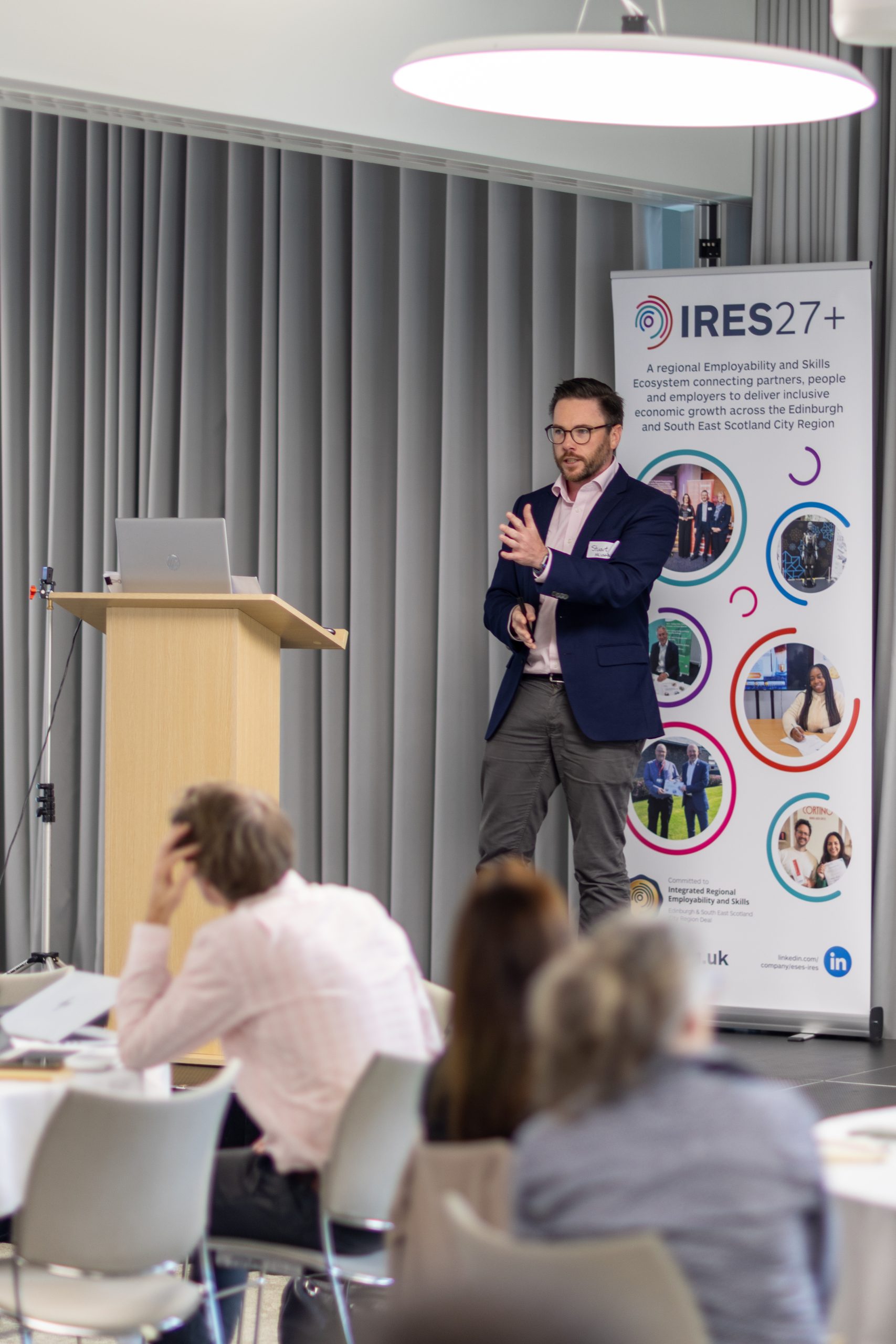
The event benefited from contributions from an experienced panel of speakers, including Ken Gourlay, Rona Hunter, Dr David Waite, Professor Stuart McIntyre, Dr Kenneth Leitch and Kenny McAllister.
Their insights provided valuable perspectives on the economic, educational and workforce challenges facing the region, while reinforcing the importance of long-term collaboration, innovation and evidence-led decision-making.
The discussions highlighted that while challenges remain, there is significant potential to build a skills system that is better aligned to both employer needs and the aspirations of learners and communities.
Alongside strategic discussions, the event also provided an important reminder of why this work matters.
It was a pleasure to welcome six young people from the Fife Community Trade Hub, whose participation reflected the real-world impact that employability and skills programmes can have on individuals and communities.
The contribution of four Fife College students, who supported catering and front-of-house activities throughout the day, was equally valued. Their professionalism and enthusiasm showcased the talent being developed through the region’s education and training partnerships.
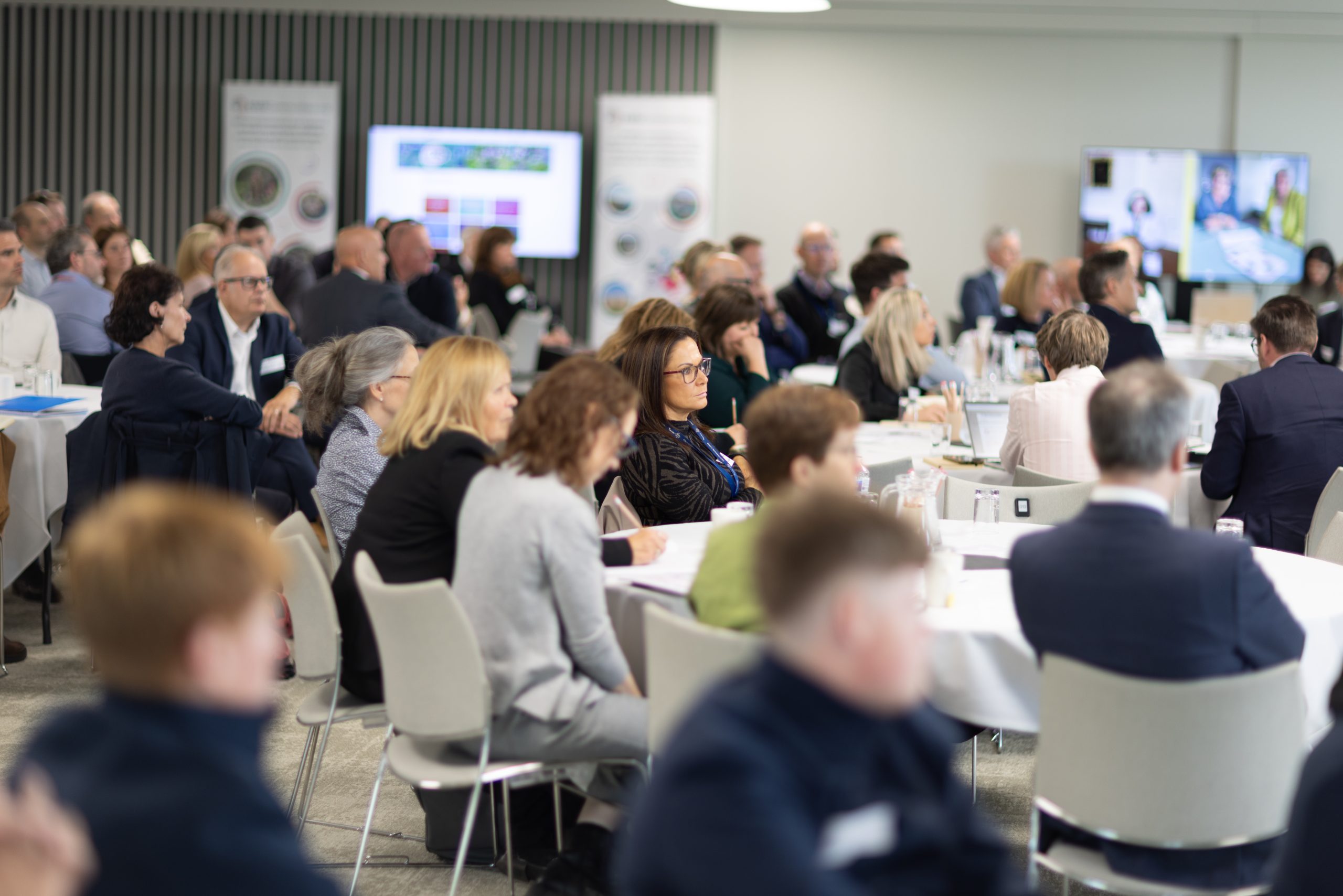
As IRES27+ moves forward, the event demonstrated that there is both momentum and commitment across the region to continue building a stronger skills and employability landscape.
The conversations throughout the day reinforced a shared belief that lasting impact comes from partnership, innovation and a collective focus on creating opportunities for people and communities.
The foundations are in place. The challenge now is to build on that progress and ensure that the region’s skills system continues to evolve in ways that benefit learners, employers and local economies alike.
Thank you to everyone who attended and continues to support IRES27+. Together, the partnership is helping to create a more connected, inclusive and opportunity-rich future for Edinburgh and South East Scotland.
Video highlights from the event will be shared soon, and those who would like to show their support for the next phase of this work are encouraged to sign the IRES27+ Pledge.
Link to the pitch deck here: IRES-27-Pitch.pdf
IRES27+ Website: IRES 27+ Continued Investment – Integrated Regional Employability & Skills (IRES)
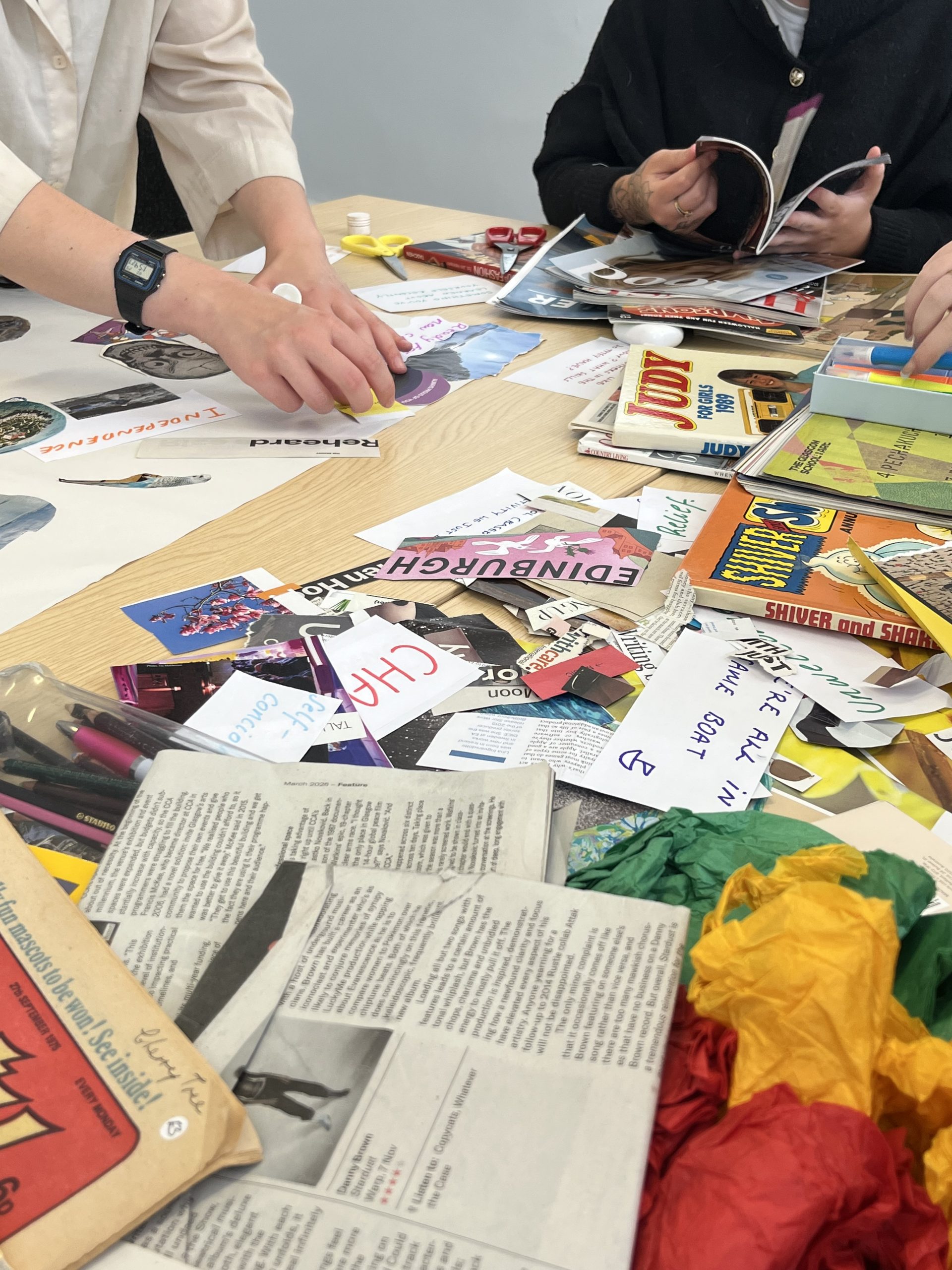 For some young people, leaving school can feel less like reaching a clear destination and more like stepping into the unknown. As highlighted in The Scotsman by Cyrenians, one of the Moving Forward providers, many young people leave school feeling completely unsure about what comes next.
For employability services, this makes early and effective transition support particularly important. It is also an area where partnership working can make a real difference.
Through Scottish Government No One Left Behind (NOLB) funding, the Edinburgh Local Employability Partnership (LEP) supports Moving Forward, an Edinburgh-wide programme helping young people make successful transitions from school into positive destinations.
Launched in April 2024, Moving Forward is delivered by a network of trusted third sector organisations across seven geographic clusters of the city. The programme supports young people aged 15.5 to 19, and up to 26 for those facing multiple barriers.
Moving Forward is an example of how the LEP network brings together the knowledge, relationships and expertise of different organisations to create more accessible support for young people.
Rather than expecting every young person to navigate services on their own, key workers provide personalised support based on their circumstances, strengths and aspirations. This can include building confidence, exploring education and training, developing employability skills and supporting young people towards employment.
One participant described how important that support from Cyrenians was:
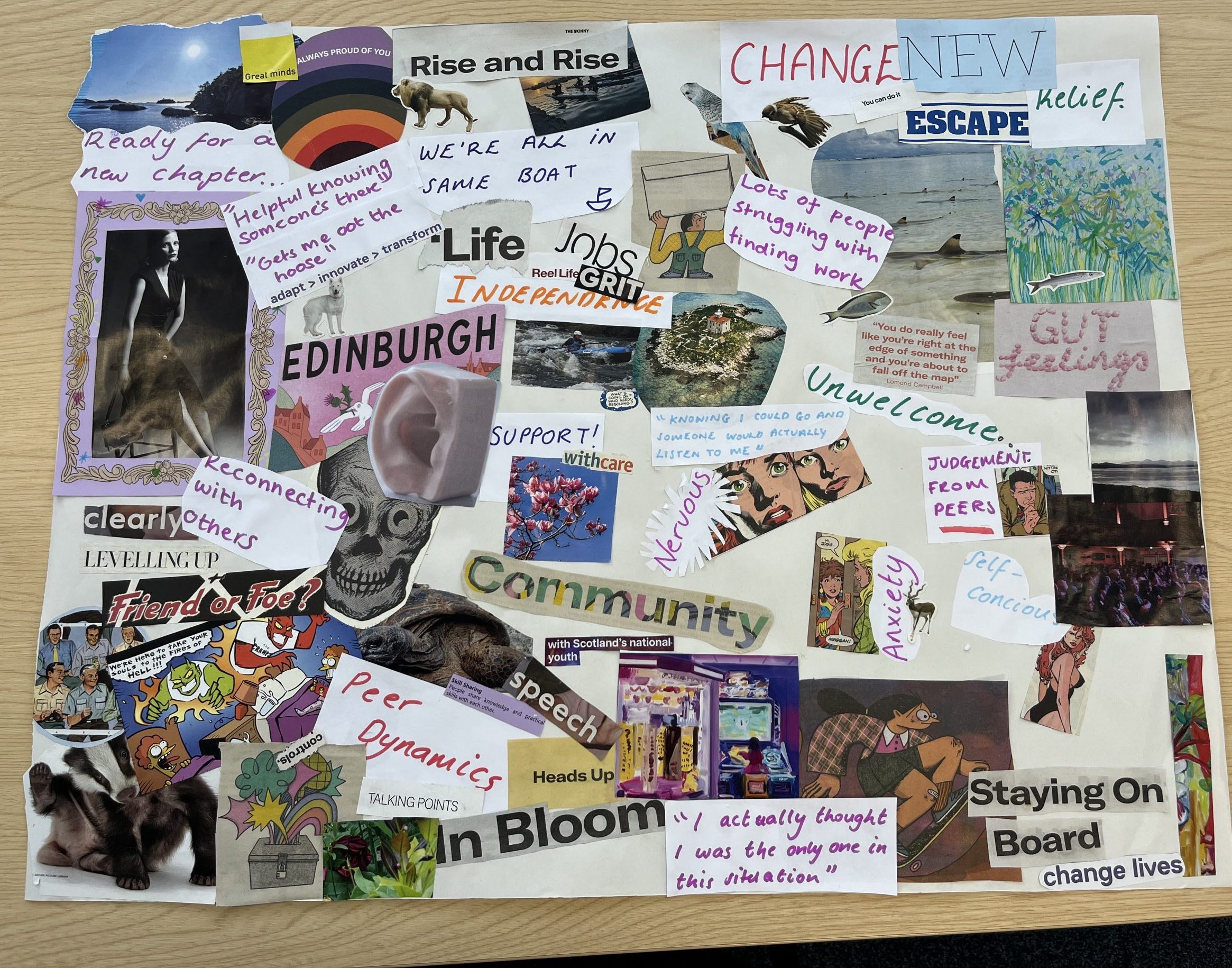
“I genuinely felt like I was the only person feeling this lost. It turns out I wasn’t. So many young people come out of school feeling completely unsure about what to do next.” (Read original article here)
The programme recognises that progression does not always begin with a job application. For some young people, the first step might be building confidence, reconnecting with others or understanding the options available to them.
Another participant explained:
“The group has been a really good way to get me oot the hoose. After years of feeling isolated, it’s been a place where I could meet people and learn how to interact with others more easily.” (Read original article here)
Moving Forward’s strength comes from the way organisations across the LEP network work together, connecting their support to create a more joined-up experience.
By working across seven geographic clusters, partners can build on their local knowledge and relationships while contributing to a city-wide approach. This helps ensure that young people can access support that reflects their individual circumstances and the communities they live in.
That is ultimately what the LEP network is working towards: making sure young people have the relationships, support and opportunities they need to take their next step.
For more information on Moving Forward and to refer potential young people visit the Moving forward page.

By Direct Partners Training Provider
The way we think about professional development is changing. For years, upskilling meant stepping out of the workplace: a course, a university, a career break. But as digital transformation reshapes virtually every industry, Scotland’s workforce is discovering a more practical alternative: learning where you already are.
At Direct Partners, that’s exactly what we’ve built our model around.
The numbers are hard to ignore. According to Scottish Enterprise’s 2025 Skills Squeeze report, 56% of Scottish businesses currently report skills shortages — and 39% expect the situation to worsen over the next five years. (Source: OU Skills Barometer, cited in Scottish Enterprise Megatrends 2025.)
The demand for data-literate, digitally capable employees is growing faster than traditional training routes can keep pace with. Businesses across Scotland are navigating this challenge every day, watching roles evolve and wondering how to equip their teams without pulling people away from the work that keeps things running.
We believe Scotland’s digital skills gap is a solvable problem. Our goal is to connect ambitious employees with nationally recognised qualifications, without the cost or career disruption that usually comes with it.
Work-based learning is exactly what it sounds like: your job becomes the learning environment. Rather than studying hypothetical scenarios in a classroom, learners apply new skills directly to their everyday responsibilities. Evidence is gathered from real workplace tasks, making the qualification both meaningful and immediately useful.
Direct Partners delivers Skills Development Scotland (SDS) funded digital and tech qualifications, accredited by Qualifications Scotland at SCQF Levels 7 and 8. For eligible employees in Scotland, the training is fully funded, with zero cost to the learner.
We currently offer three in-demand tech qualifications, each designed to align with roles that already exist in your place of work:
Data Analytics (SCQF Level 8): For anyone working with data, reporting, or business insight. Learners cover the full analytics pipeline using Python, from managing and transforming data through to visualisation and decision-making.
Digital Marketing (SCQF Level 7): For those already active in marketing, social media, or content. This qualification formalises and strengthens existing skills across SEO, analytics, and digital strategy.
Software Development (SCQF Level 8): For those working within a coding team. A technically demanding qualification covering design, build, testing, methodology, and the full development lifecycle.
Each qualification takes around 12 months to complete, with a flexible, supported approach. Learners have monthly one-to-one remote sessions with their trainer, self-paced study materials, and progress reviews every 13 weeks, involving the learner, trainer, and line manager.
The programme is open to employees in paid employment with a business based in Scotland, where the chosen qualification is relevant to their current role. Manager support is required throughout, which is not a heavy commitment, but an acknowledgement that the learning is happening with the business, not away from it.
Digital transformation isn’t coming… it’s already here. With over half of Scottish businesses already feeling the pressure, and nearly four in ten bracing for it to intensify, the window to get ahead is now, not later.
For businesses, the question is no longer whether their teams need tech skills, but how to develop them without disruption. For employees, this is a rare opportunity to gain a recognised qualification, at no cost, without putting their career on hold.
Work-based learning doesn’t ask you to choose between your job and your development. It makes them the same thing.
Direct Partners is an award-winning training provider based in Edinburgh, delivering SDS-funded tech qualifications across Scotland. To find out more or check eligibility, visit directpartners.co.uk or call 0131 600 0820.
Written by Jessie Colligan, IRES Communications and Events Assistant
We are pleased to share the latest updates from the Integrated Regional Employability and Skills (IRES) Programme, including the 2027+ proposal, the new animation video and the launch of the pledge campaign.
The IRES Programme continues to deliver significant impact across the region, exceeding its headline targets years ahead of schedule. Building on this success, we have spent the past year working with over 180 partners across the region to co-create the IRES 2027+ Proposal, setting out how the programme can be expanded to meet rising skills demand. The IRES 2027+ Proposal outlines an ambitious programme supported by £140 million of investment, aiming to deliver:
• 65,000 additional skills improvements
• 30,000 job outcomes
• 10,000 career progressions
Delivered through eight Skills Gateways and four Enabler projects, the programme will strengthen regional pathways into higher-skilled, better-paid work across key sectors.
Watch the new IRES 2027+ animation, which provides a short overview of the programme, highlights the impact achieved so far, and explains how partners across the region have co-produced the IRES 2027+ Proposal to respond to our future regional skills needs.
The IRES 2027+ Pledge Campaign was launched on 6th March by the Edinburgh & South East Scotland City Region Deal Joint Committee, marking the start of a region-wide call for support for the next phase of the programme.
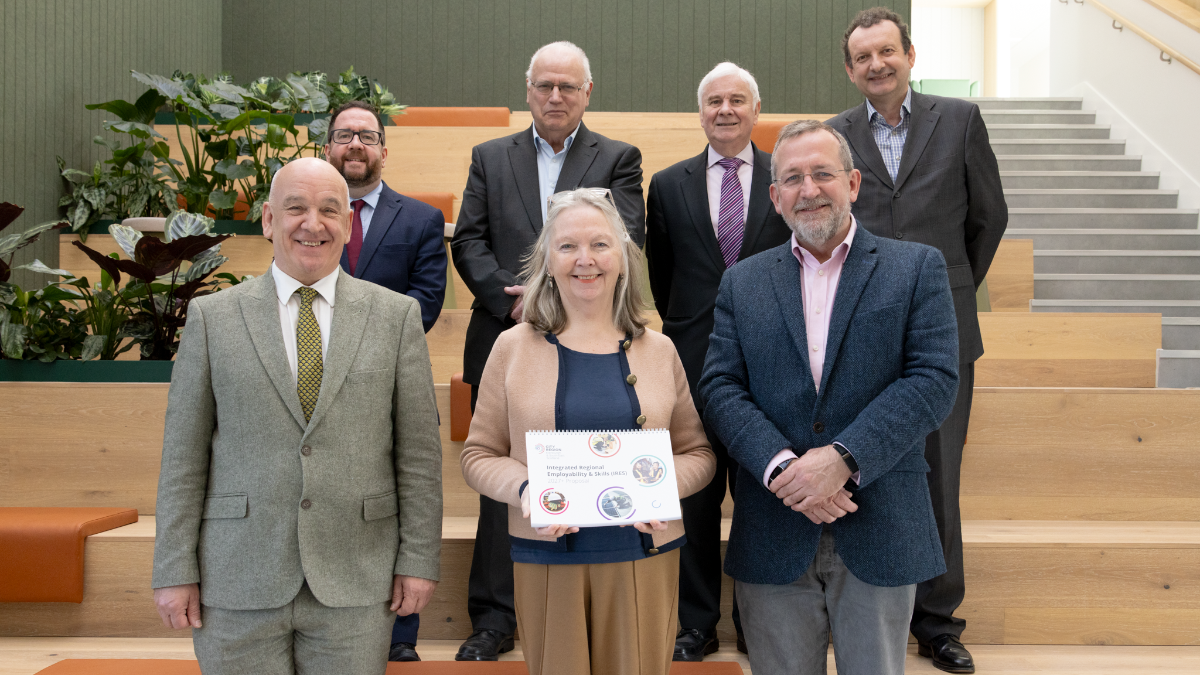
Over the coming months, industry partners, employers, and stakeholders across the region will be invited to sign the pledge, demonstrating their support for continued investment in the regional skills system and the vision set out in the IRES 2027+ Proposal.
If you would like to know more, please follow us on the Integrated Regional Employability & Skills (IRES) LinkedIn page.

The Parental Transition Fund is a Scottish Government initiative designed to support parents to progress into education, training, and employment, by removing the barriers that can prevent families from moving forward. Poverty rates in Edinburgh have remained largely unchanged in the past five years and meaningful work has a strong role to play in offering a sustainable route out of poverty for many families.
The fund is available to eligible parents from the six priority family groups who are already engaged with No One Left Behind (NOLB) funded employability services in Edinburgh. Organisations can apply to the fund on behalf of parents they are working with to provide support for essential costs to remove barriers to employment or education including clothing or equipment, transport, training fees, and short-term childcare amongst others, enabling parents to participate fully in employability activity.
The fund can also support parents with No Recourse to Public Funds (NRPF), where they have the legal right to work, ensuring even more families can benefit from opportunities to build sustainable futures.
The Fund in Practice: Parents’ Stories
One single parent received support with transport costs to attend a job interview in the hospitality sector. She secured the role and continued to receive transport assistance during her first month of work, helping her manage costs until she received her first wage. One year later, she is undertaking further training for a promotion with her same employer, providing long term financial stability for herself and her daughter.
“That small bit of support gave me the chance to take that first step, and it has completely changed our lives.”
Supporting Parents with No Recourse to Public Funds
A parent with NRPF required short-term childcare support when starting full-time employment. Her child has additional support needs, including autism. Transition Fund assistance enabled appropriate childcare arrangements to be put in place, allowing her to begin employment while ensuring her child’s needs were met.
“This support meant the world to me. I could start my job knowing my son was cared for, it gave me the breathing space I needed to focus on myself.”
Enabling Participation in Education
One parent accessed funding to enrol in a short course in Administration and IT at Edinburgh College. The support enabled them to meet course-related costs that had previously prevented participation. The course has supported skills development and improved confidence in progressing toward employment.
Building Confidence
Another parent was referred through NOLB after her son, who has complex health needs, left school. Experiencing anxiety and depression, she initially struggled to engage outside of home.
Through supported engagement with local activities and Transition Fund assistance, she has gradually rebuilt her confidence and is now volunteering locally and preparing to return to work.
“A few months ago I couldn’t leave my house. Now I’m out walking, swimming and committed to volunteering and I feel like myself again”.
Supporting Flexible Learning
One parent undertaking a Data and Administration course required flexible study options due to her child’s additional needs. Transition Fund support for a personal laptop enabled her to continue her learning remotely and remain engaged with her course. Without this support, continuing her learning would have been impossible.
Why this Matters
Every story above begins with a small offer of support - a bus ticket, a laptop, childcare payments - but for these families each represented a big step towards a brighter future, by building confidence and new skills and learning.
The Parental Transition Fund plays an important role in removing practical and financial barriers that can limit parents’ participation in employability activity. By covering essential costs at key transition points, the fund supports parents to engage in learning, training and employment building confidence, skills and sustainable pathways toward improved outcomes for the whole family.
How to Apply
Service providers working with eligible parents through NOLB provision are invited to apply to the Parental Transition Fund on behalf of parents, using this application form and guidance notes below:
Parental Transition Fund Application Form 2025-26
Parental Transition Fund Application Guidance 2025-26
Key Information for Applicants
Examples of categories that can support progression include:
Queries and completed applications should be sent to:
pa*******************@***********ov.uk
Parents accessing support from other services are welcome to register with the Parental Employability Support (PES) team to look at accessing the Transition Fund. Services are encouraged to contact the PES team to discuss individual opportunities.
Feedback
If you have already applied to the Parental Transition Fund, we would welcome your feedback on the process and how it could be improved. Please share your views by completing this short survey: Complete the survey


Written by Georgina Bowyer, UKSPF Grants Manager, Capital City Partnership
King’s Trust Scotland Awards 2026
The UKSPF team were pleased to attend the King’s Trust and TK Maxx Scotland Awards last week, held on 22 January 2026 at the Voco Grand Central Hotel in Glasgow. The event celebrated seven individuals and recognised one community group for outstanding achievements in education, employment, enterprise, and social impact. The awards marked the charity’s 50th anniversary year and highlighted the 6,000+ young people supported by the King’s Trust Scotland in the last year alone. Congratulations to all the winners and we wish you well for the UK-wide awards taking place in the summer.
Success in Edinburgh
Through the UK Shared Prosperity Fund (UKSPF) in Edinburgh, the King’s Trust has been supporting young people to find their first steps into employment or enterprise. The programmes on offer help young people to build skills and gain confidence and navigate pathways into work.
A recent Edinburgh success story that was shared with us focuses on Rhys, a young man who joined The King’s Trust Scotland’s Get Into Lifeguarding with Edinburgh Leisure programme. Rhys was unsure about his next steps after leaving school with National 4 qualifications, but with encouragement from his Careers Advisor, joined the programme. It aligned perfectly with his interests in swimming, fitness, and learning new skills.
Through the programme, Rhys developed lifeguarding and water safety skills; CPR and First Aid knowledge; and communication and interview confidence. He enjoyed the training and enjoyed working with others while building new skills. His main goal was to achieve the National Pool Lifeguarding Qualification (NPLQ)—a key requirement for future employment in the sector.
Rhys successfully completed his NPLQ and is now employed part-time with Edinburgh Leisure as a Leisure Attendant. He hopes to use this as a stepping stone toward returning to college in the future.
Rhys’ achievement reflects the meaningful impact that King’s Trust Scotland has on young people in Edinburgh and beyond. Whilst UK Shared Prosperity funding is coming to an end soon, the King’s Trust work in Edinburgh will continue thanks to alternative funding streams. To find out more about services offered in Edinburgh, you can visit the King’s Trust website here.
The City of Edinburgh Council, in partnership with NHS Lothian, Edinburgh College and Virgin Hotels will be hosting a number of online information sessions for this year’s intake for Project SEARCH.
Edinburgh Project SEARCH (EPS) provides employment and learning opportunities for young people with a disability.
Starting in August and lasting one college year, our interns will have the opportunity to:
A tutor and job coaches are based on-site to provide classroom learning and support.
Outcome results are very high with 60 to 100% of interns moving into paid jobs.
To be eligible for Project SEARCH, you must
To find out more
We are hosting information events to tell everyone what the programme is, how it works and how to apply. If you would like to attend, please use the link below to register and please share within your networks.
Edinburgh Project SEARCH 2026/27 Information Sessions
Our 2026/27 programme will begin in August.
Applications for Edinburgh Project SEARCH can be made through the link below:
Project Search SCQF 4 | Edinburgh College
You can see a video of the work our interns do at Project SEARCH on the link below:

Written by Georgina Bowyer and Jessie Colligan, Capital City Partnership
Christmas time is about coming together to share warmth, kindness, and hope with those who need it most. Across the Capital City Partnership networks, organisations work hard to assist the most vulnerable all year round, and we are pleased to highlight several of the Christmas campaigns for this year. These wonderful initiatives are just a few examples from our UK Shared Prosperity Fund network, which we know will bring comfort to many individuals and families in Edinburgh facing hardship during this festive season. A wider list compiled by our Community Wealth Building team for the City Region is available here.

Vintage Vibes: Transforming local lives
Over 12,000 older people in Edinburgh will have the TV as their main form of company this Christmas period. For hundreds of local over-60s, everything changed with one Vintage Vibes friendship. This Christmas, you can let someone know they matter – by writing one simple Christmas card to a local older person in Scotland’s capital. Visit the Vintage Vibes website here to find out more.

Make a difference this Christmas with Fresh Start
Fresh Start is an Edinburgh-based charity helping people who have been homeless to set up their new home and settle in their community. You can show your support for those experiencing hardship this festive season by donating to the Cookers for Christmas Appeal. Your donation will help support those who are emerging from homelessness by providing them with essential white goods, such as cookers, fridges/freezers and washing machines. Visit the Fresh Start Just Giving page to get involved.

Be a Secret Santa for a vulnerable child with Action for Children
Action for Children and Nationwide Building Society are working in partnership on the Secret Santa campaign. The magic of Christmas begins in childhood - it’s a time for children to feel loved and make memories that last a lifetime. But for too many children across the UK, Christmas is anything but magical. To help change that, you can become Secret Santa by visiting the Action for Children website and donating.

Empty Kitchens Full Hearts' Big Give Challenge
For one week only, every donation you make to Empty Kitchens Full Hearts will be match-funded — doubling your impact. Donate £20 today, and you’ll provide two full weeks of healthy meals and wraparound care for someone who needs support this winter. With your help, we can reach 300 people with warmth, nourishment, and vital care during the coldest months of the year. Match funding is available from 12 pm on December 2nd to 12 pm on December 9th, 2025. To have your gift doubled, simply donate through the Big Give campaign using the link.
Thank you for supporting these campaigns.


Written by Georgina Bowyer, UKSPF Grants Manager, Capital City Partnership
As well as ushering in falling leaves and the need for extra layers, October also marks the midpoint of the financial year and an important moment in the reporting cycle for those of us managing contracts and grants at Capital City Partnership. In terms of the UK Shared Prosperity Fund, we are in the fourth year of the programme, which for most organisations means the third year of funding. The service delivery (revenue) side of UKSPF Edinburgh is a continuation of the previous work allowing for consistency and for organisations to build on what has been achieved since the start of the fund. On the other hand, under the capital (physical improvements) side of the fund, new projects have been selected given the start and finish nature of the previous pieces of work. This blog provides an update on the progress of UKSPF projects at this crucial review point of the financial year.
Under capital, a budget of £250,000 has been allocated towards community centre improvements in Edinburgh and the remaining capital funding has been awarded to projects who had applied to Edinburgh’s allocation of the Place Based Investment Programme (PBIP). This strand of Scottish Government funding has similar aims to UKSPF and was over-subscribed in Edinburgh. The seven projects selected for UKSPF funding include renovation works at Bellfield, which is a B-listed former church in Portobello, owned by Action Porty, a charitable community benefit society. This well-used community space will be further improved by removing fixed pews and installing a mezzanine floor at the bottom of the balcony to create more usable and flexible spaces within the building, increasing usage and conserving energy.
Similar projects are being carried out at the Spylaw Coach House in the Colinton area of Edinburgh, and at The Byre in Duddingston. Both are repurposing historic buildings to create attractive multi-purpose community spaces which will help to increase social connection and deliver health and wellbeing activities. A brand-new adventure playground will also be created in the Wester Hailes area of Edinburgh, designed in partnership with the local community and using natural materials to create an engaging play space for children from the surrounding area, which has particularly high levels of deprivation.


In this new financial year, the “supporting local business” projects continue to thrive. Business Gateway collaborated with Edinburgh Chamber of Commerce to support several local businesses to explore international trade and to build relationships in a new market by taking part in trade missions to Boston or China. Codebase recruited for this year’s Greentech cohort, offering 32 applicants places on the programme which began in early October. Through the Edinburgh Chamber of Commerce programme, four companies submitted their B Impact Assessment to B Lab UK for certification, following another two Edinburgh businesses having recently achieved their B Corp certification.
Vintage Vibes, supported through the “Communities and Place” priority, celebrated ten years of activity with a vibrant campaign ‘Ten Years Bold’ which not only marks a decade of volunteers supporting older people through one-to-one befriending and group activities, but also underlines the empowering nature of the work in helping older people to feel themselves again and be part of the community. You can see some of the campaign materials here.
Edible Estates have made significant progress in transforming the previously derelict bowling green in Oxgangs into a large neighbourhood garden, as well as successfully supporting Oxgangs Community Gardeners to become their own registered charity. Empty Kitchens Full Hearts have completed the refurbishment of their packing hall floor and have been working in partnership with U-Evolve to facilitate weekly gardening sessions for young people struggling with their mental health.
The Multiply strand of work has continued this year, now under People and Skills, offering a suite of courses including Digital Skills and an “Our World and Numbers” course at the science museum Dynamic Earth. A total of 350 clients are newly engaged in employability services funded through UKSPF in this financial year, with organisations frequently working with partners and employers to achieve support people into positive destinations. For example, Edinburgh Women’s Aid ran an employability course in partnership with State Street bank, resulting in five participants being offered work, two returning to study, and one setting up her own businesses.
The UK Shared Prosperity Fund is due to close in March 2026 and will be replaced by the UK Government’s Pride in Place and Local Growth Fund initiatives. Local authorities across Scotland are waiting for further guidance on how these will be implemented, following which plans and processes for their own local delivery will need to be put in place. This leaves current UKSPF-funded projects vulnerable to loss of funding, and many will need to turn their attention to sourcing alternative funding possibilities in the second part of the financial year.
In the meantime, projects across all themes continue to deliver throughout and up until the end of March. We look forward to seeing the capital projects reach completion in the coming months, and to gathering the revenue projects together for a network event in November. To read more about UKSPF-funded projects, you can explore the webpages here.


Written by Georgina Bowyer, UKSPF Grants Manager, Capital City Partnership
The Edinburgh Poverty Commission has released a 2025 update on tackling poverty in Scotland’s capital. Five years after the original report “A Just Capital”, the Poverty Commission—working alongside End Poverty Edinburgh (EPE)—has reassessed progress toward the city’s 2030 anti-poverty goals.
The report was launched at an event on Friday 31 October, attended by Capital City Partnership staff, who welcomed the findings. Rona Hunter, Chief Executive Officer, chaired an expert panel that addressed questions from the audience.
The report highlights stagnating poverty levels and rising hardship linked to the housing crisis and pressure on voluntary services. Yet, positive developments include a decline in low pay, stronger social security, better income support, and more effective neighbourhood-level collaboration.
The Commission is calling for renewed political and civic commitment, sustained funding, and genuine cross-sector collaboration to invest in housing, education, fair work, and social care. With continued collective effort, the Commission believes that it remains possible to achieve Edinburgh’s 2030 vision of a poverty-free city. You can download the full 2025 Update report here.
Copyright © 2025 | The Edinburgh Local Employability Partnership