
Written by Georgina Bowyer, UKSPF Grants Manager
A report published today marks the beginning of the third year of UKSPF in Edinburgh. As the final year of this three-year funding programme begins, we are pleased to share a report of the impact so far, including some key statistics and case studies.
You can access the report here: UK Shared Prosperity Fund Edinburgh Progress Review [PDF].
UK Shared Prosperity Fund (UKSPF) is a central pillar of the UK Government’s Levelling Up agenda. Between 2022 and 2025, it is providing over £2.6 billion of funding for local investment across the country, and £12.3 million to fund projects within the City of Edinburgh. As we approach the final year of this funding round, the team has begun to see some fantastic examples of impact.
The majority of the work is being led and delivered by third-sector organisations, often those who are place-based and who deeply understand the needs of specific communities within Edinburgh. This is complemented by projects delivered by internal council teams, including new marketing campaigns for the city offering special events and discounts to residents, aiming to ensure that local people can benefit from the extensive tourist offering (see the Residents Rewards site ). Funds are also delivering boosts to business including support and start-up grants available through Business Gateway and new programmes run by Codebase which enable and encourage new technology businesses to emerge.
In the third year of the programme, we expect to see further impact, firstly in the continuation of services which support thousands of people across the city in terms of food, welfare advice and employability support. Additionally, several new significant outcomes will be achieved including the completion of a new education and youth work space at Spartans Community Foundation and the launch of a new grant fund for individuals by Turn 2 Us.
You can read more about the impact of UKSPF in Edinburgh and what’s to come in the Progress Review UK Shared Prosperity Fund Edinburgh Progress Review [PDF].

Written by Georgina Bowyer, UKSPF Grants Manager and Jessie Colligan, UKSPF Programme Administrator
There are some significant challenges in the funding landscape for third sector organisations at present and some difficult unknowns as projects try to prepare and plan for the new year ahead. In the face of continued strains on the cost of living, services are seeing consistent need amongst their communities. There are no easy solutions and sadly the loss of some projects will have an inevitable impact on those communities they have been serving in the years to come.
Whilst this is not something to be brushed over, it is also clear that the determination and resilience of the third sector continues which is hugely encouraging. It also reflects the strength and resolve that we see amongst the people and communities who have often found their way through difficult times and are carving new paths for themselves with the support offered by services around the city.
Reflecting the positivity and ambition shown by projects and their participants, a few of the UKSPF-funded services have shared with us their hopes for 2025:
Edible Estates Home - Edible Estates
The investment and focus given to community gardening through the Growing Together project has had a diversity of impacts. We hope 2025 will bring further increases to people's physical and mental well-being, community connections, resilience and improvements to their environment. In the words of a participant “Getting more spaces in the area started with planters/raised beds would not only make the place look better but will bring joy to more people and a sense of pride in the area we live”.
The Challenges Group Challenges Group | Enterprising solutions to global challenges
In 2025, we hope our programme, Making Work Work – for Edinburgh Women continues to break barriers and unlock potential. Over two years, we've empowered over 100 women to rebuild their confidence and move towards or into meaningful work following a career break. Our hope is for sustained funding to help even more women reclaim their careers while amplifying awareness of the invaluable talent women returners bring.
Together, we can champion flexible, inclusive work and dismantle employment barriers, proving that with support, every woman can make a meaningful contribution, and we can build a future where no talent is left untapped.
Edinburgh Chamber of Commerce Edinburgh Chamber of Commerce
Our hope for 2025 is to continue to support Edinburgh businesses on their net zero journey by helping them calculate their carbon impact and create net zero plans. We want to continue to educate and inform businesses on the importance of sustainability by hosting events, creating case studies and articles and sharing experiences from local companies.
We want to support more net zero and B Corp cohorts so that organisations put sustainability at the forefront of their business operations. This support is vital as highlighted by the Scottish Whisky Experience “The support from the team has been invaluable to provide a structure and focus in the area of sustainable development, in all its meanings, and planning a pathway to net zero.”
Spartans Spartans Community Foundation
We are hugely excited as the build enters its final phase, with handover due in the coming weeks. The new Education and Youth Work space promises to be an integral part of life for many young people in the north of Edinburgh. We are #HereForGood.
We wish you all a hopeful new year, and look forward to continuing to work with you in 2025.

Written by Georgina Bowyer, UKSPF Grants Manager
The UK Shared Prosperity Fund (UKSPF) team were pleased to attend a launch event earlier this month marking the reveal of a new visual identity for Apex Scotland. Apex supports people with experience of the justice system to build new lives. In Edinburgh, UKSPF funds Apex to deliver employability support to these individuals.
As well as celebrating the new brand, Apex also introduced a new evidence-based practitioner resource, based around a deck of cards which will guide the way in which Apex support people. Developed in partnership with the University of Dundee, this new model aims to deliver maximum and sustainable impact for those supported.
To read more about the new brand and card deck, you can visit the Apex Scotland website here Our new practitioners resource - Apex Scotland.
Biddy Kelly, Managing Director, Fresh Start interviewed by Turn2us.
The Thriving Futures Fund is a three-year grant-making programme from Turn2us Edinburgh Trust, delivered in partnership with five organisations across Edinburgh and supported by the UK Shared Prosperity Fund (UKSPF).
Born from an ambition to support people in Edinburgh not only to survive but to thrive, their vision is for everyone in Edinburgh to have enough money to live well now and the resources—as individuals and collectively—to build confidence in the future.
The project is built on the premise that financial support can have a longer-lasting impact and help people thrive when provided alongside tailored support. Since its inception in 2011, the Turn2us Edinburgh Trust has made over 5,000 new grant awards to help people experiencing poverty in the city, as well as providing ongoing financial support to several hundred regular grant recipients.
Thriving can look different for everyone, and the Thriving Futures Fund allows people to decide what that looks like for them. To explore how this vision is being realised, the team interviewed Biddy Kelly from Fresh Start, who was a design partner and who is one of the fund’s delivery partners as part of NESSie. Fresh Start is an Edinburgh-based charity helping people who have experienced homelessness establish themselves in their new homes, through the provision of goods and services.
Biddy shares insights into how this new approach is making a real difference in people’s lives: “NESSie is a collaboration between Fresh Start, Move On, North Edinburgh Arts, and Spartans Community Foundation. It’s a different kind of support service, with no criteria other than living in North Edinburgh. There’s no assessment, no time limit—just support tailored to what people need. We help with everything from immediate crises to long-term support, addressing issues like housing, mental health, domestic violence, and more.
The partnership with Thriving Futures Fund allowed the opportunity to try something innovative, focusing on building relationships and offering long-term support. At NESSie, we're committed to working with people based on their unique needs rather than being constrained by traditional KPIs.
The design process was truly fascinating. One of the things I appreciated most was having a protected, safe space to explore ideas. My main learnings from the design process were about staying open-minded and curious. The experience reinforced the importance of maintaining an open mind and being willing to listen and be challenged by others in the room.
The Thriving Futures Fund is notable for its innovative and bold approach. The longevity of the fund is a significant factor as it allows for a long-term perspective and iterative development. The extended timeframe supports a more adaptable and responsive approach, enabling adjustments based on real-world experience and changing needs.
Ultimately, the fund’s focus on people and their individual stories is central to its distinctiveness. By prioritising personal impact over bureaucratic processes and celebrating the small victories and unique achievements of those supported, the fund keeps humanity at its core.”
To read more about the Thriving Futures Fund visit the Turn2us website here.

Written by Jessie Colligan, UK Shared Prosperity Fund Programme Administrator
Edibles Estates have recently released a video highlighting the community growers bringing gardens back to life across Edinburgh. The Growing Together project is delivered by Edible Estates on behalf of The City of Edinburgh Council and funded by the UK Shared Prosperity Fund.
Community growing projects are different from neighbourhood gardens in that: they seek to grow at a network of sites; the participants grow as a group rather than managing their own raised bed; and the produce is channelled towards shared community meals and local good causes. Community growing projects can run alongside neighbourhood gardens in the same community.
This short film captures their achievements, featuring firsthand accounts that emphasise the ways in which community growing projects benefit individuals and their communities. The film premiered at Edible Estates’ recent Harvest Gathering celebration. If you would like more information about the project, you can visit the Growing Together website.
Written by Charlotte Keeley, Programme Manager for Greentech Futures, Medtech, Healthtech Bridge and Cyber Bridge

The UK Shared Prosperity Fund (UKSPF) has supported two CodeBase programmes over the last two years. Edinburgh Greentech Futures and Edinburgh Medtech Forums support and nurture early-stage startups in the sustainability and medical technology sectors. These initiatives aim to build thriving communities of entrepreneurs, providing them with the knowledge, resources and connections they need to succeed.
What is a startup?
At its core, a tech startup is an early-stage digital business aiming to disrupt the status quo through the development of a software product. Think about Airbnb or Skyscanner for a second: they started as tools built to solve a problem and look at them now. You probably can’t remember a time without them and have used them at least once before.
Building a greener tomorrow
Edinburgh Greentech Futures brings together a community of like-minded individuals who are passionate about greentech, offering a platform for learning, collaboration and growth. Participants take part in community meetups, hackathons, and an education programme designed to upskill founders and share startup building best practices. In its first year, the programme delivered 10 education sessions and 6 community meetups, supporting a cohort of 22 startup founders and 91 event attendees, and this is currently increasing as the programme runs for a second year.
The programme offers practical insights into building a startup, with topics such as market segmentation, customer discovery and product development. Importantly, it also shines a spotlight on founders in the greentech space, offering visibility and opportunities for collaboration. In the first year alone, 66 startups benefitted from the programme and raised over £11 million of investment.
One success story is Ceri Shaw, a CodeClan graduate who participated to explore opportunities in the sector, Ceri said of the programme: “[it was an] excellent programme, it challenged me to think of my own ideas in the greentech space and helped me make some good connections and am now a cofounder on a greentech startup. I have now been accepted onto the Carbon13 accelerator which I hadn’t even heard of before."
With 26 participants enrolled on the current programme which started in October 2024, the future is bright for Edinburgh’s greentech scene. The sessions will blend online and in-person engagement, making them accessible to a wider audience while fostering personal connections with the local community, and encouraging new startups solving some of the world’s biggest challenges.
Advancing healthcare innovation
While Edinburgh Greentech Futures focuses on environmental sustainability, Edinburgh Medtech forums brought together healthcare entrepreneurs and professionals to drive innovation in medical technology. The monthly meetups created a dynamic space for medtech founders, clinical experts and investors, to share knowledge, collaborate and identify investment opportunities.
The programme’s first year included 6 meetups, with 118 attendees from across 88 businesses, which have raised over £22 million of investment collectively. The success of these meetups highlights the importance of community in driving medtech innovation, where collaboration can often lead to breakthroughs that improve patient care and medical outcomes.
Anne Moore, COO of Prothea Technologies, attended the forums and found the experience invaluable. Prothea, which is developing a solution for lung cancer biopsy and treatment, raised €12 million in a series A funding round in April 2024. A “series A” funding round follows the initial seed funding and is the next stage of investment as the business begins to grow. Anna shared, “[The forums have been] just the right mix of information and networking, whether it's hearing inspiring stories and learnings from people who are further along the journey or simply comparing notes (and war wounds!) with people at a similar stage in the process. It's also been great having the events at different times of the day as it gives you a chance to step away from the coal-face and think about the broader picture.”
Looking ahead
Together, these programmes have made a significant impact on the local startup ecosystem, with 134 enterprises taking part, who have raised over £33 million of investment in total. The programmes are set to continue building Edinburgh’s reputation as an innovation centre. To learn more, you can visit the CodeBase website here.
Written by Georgina Bowyer, UKSPF Grants Manager with contributions from Megan Wilson, Enable (part of the All in Edinburgh consortium) and Naina Minhas, Networking Key Services
Growing levels of in-work poverty have been well documented at a national level. A result of wage stagnation and rising cost-of-living, work is sadly no longer a guaranteed route out of poverty. JRF’s UK Poverty report earlier this year showed that during 2021/22, 64% of working-age adults in poverty were living in a household where at least one adult is in work.
The rise of in-work poverty is a theme that rings true for local organisations supporting individuals in Edinburgh and is a topic worthy of note this Challenge Poverty Week in line with today’s theme of affordable incomes.
Employability services in Edinburgh exist not only to support those out of work, but to help those who are looking to progress in work or find better work. Support can be given to explore training and education opportunities, to engage with current employers, to polish CVs and to navigate and plan for future options. Two local organisations spoke to us about a recent increase in those seeking in-work support.
The All in Edinburgh consortium is the city’s core employability provision for those with long-term health conditions or disabilities. They have seen a significant increase in employed Edinburgh residents seeking support which has accelerated over the past two years. The increase is largely due to the rising cost of living, as many have found that they require better pay in order to sustain themselves, whilst others are looking for increased job security in permanent roles in favour of zero-hour contracts. As a result of covid, people have also become more aware of the benefits of home working and are keen to seek roles that offer a hybrid approach.
Those seeking support from All in Edinburgh come from a variety of sectors including retail, hospitality and administration. The consortium works closely with employers to explore the benefits of inclusive recruitment, permanent contracts and upskilling their workforces. Staff are able to help facilitate reasonable adjustments such as hybrid working, which can be hugely beneficial to people, helping them to overcome barriers caused by disability, childcare and travel.
Similarly, Networking Key Services (NKS), an organisation supporting the South-East Asian community in Edinburgh, has seen in an increase in clients requesting in-work support. NKS has spent nearly four decades working with South Asian communities in Edinburgh, focusing on health, welfare, and empowerment. Over the past two years, significant strides have been made in addressing unemployment, poverty, and the skills gap, particularly by offering upskilling and job market accessibility to those from ethnic minority backgrounds.
The work of NKS has revealed how in-work poverty is exacerbated by a combination of factors, including discrimination, low wages, and unsustainable working conditions. Ethnic minorities, particularly those from Pakistani and Bangladeshi communities, face unique challenges. Many of those who secure employment, leave quickly due to high workload, low wages and difficult working environments. This is often compounded by a sense of exclusion, with individuals feeling less confident to advocate for better conditions.
For individuals coming to NKS, finding appropriate work is often a challenge, with many ending up in insecure short-term jobs. Women, who make up around 50% of those seeking support, often find re-entering the job market particularly challenging, especially those with limited digital literacy or language and communication barriers. The majority of women supported by NKS are interested in roles within childcare or catering, but face additional barriers such as outdated skills, lack of qualifications, and unfamiliarity with the current job market and work culture. They mainly look for part-time and flexible work. NKS helps by offering training, CV writing assistance, and interview coaching, as well as connecting individuals to suitable job opportunities.
Some barriers are more difficult to overcome and NKS have identified that the devaluation of overseas qualifications and employers’ reluctance to sponsor visas for highly qualified individuals as ongoing challenges. NKS argue that structural changes are needed, including policies that address these barriers and promote inclusive hiring practices, alongside greater recognition of international qualifications. NKS remains committed to supporting South Asian communities but believes that a strategic focus on tackling these systemic issues is essential for long-term change.
Both All in Edinburgh and Networking Key Services are able to support individuals in-work in Edinburgh through the UK Shared Prosperity Fund (UKSPF), a three-year programme of funding from UK Government which is due to end in March 2025. UKSPF funding is distributed through local authorities and the UKSPF Edinburgh programme of work is managed by Capital City Partnership. We are glad to add our support to Challenge Poverty Week by highlighting some of the current issues relevant to the services and communities in our city.
Written by Georgina Bowyer, UKSPF Grants Manager with contributions from Megan Wilson, Enable (part of the All in Edinburgh consortium) and Naina Minhas, Networking Key Services
Growing levels of in-work poverty have been well documented at a national level. A result of wage stagnation and rising cost-of-living, work is sadly no longer a guaranteed route out of poverty. JRF’s UK Poverty report earlier this year showed that during 2021/22, 64% of working-age adults in poverty were living in a household where at least one adult is in work.
The rise of in-work poverty is a theme that rings true for local organisations supporting individuals in Edinburgh and is a topic worthy of note this Challenge Poverty Week in line with today’s theme of affordable incomes.
Employability services in Edinburgh exist not only to support those out of work, but to help those who are looking to progress in work or find better work. Support can be given to explore training and education opportunities, to engage with current employers, to polish CVs and to navigate and plan for future options. Two local organisations spoke to us about a recent increase in those seeking in-work support.
The All in Edinburgh consortium is the city’s core employability provision for those with long-term health conditions or disabilities. They have seen a significant increase in employed Edinburgh residents seeking support which has accelerated over the past two years. The increase is largely due to the rising cost of living, as many have found that they require better pay in order to sustain themselves, whilst others are looking for increased job security in permanent roles in favour of zero-hour contracts. As a result of covid, people have also become more aware of the benefits of home working and are keen to seek roles that offer a hybrid approach.
Those seeking support from All in Edinburgh come from a variety of sectors including retail, hospitality and administration. The consortium works closely with employers to explore the benefits of inclusive recruitment, permanent contracts and upskilling their workforces. Staff are able to help facilitate reasonable adjustments such as hybrid working, which can be hugely beneficial to people, helping them to overcome barriers caused by disability, childcare and travel.
Similarly, Networking Key Services (NKS), an organisation supporting the South-East Asian community in Edinburgh, has seen in an increase in clients requesting in-work support. NKS has spent nearly four decades working with South Asian communities in Edinburgh, focusing on health, welfare, and empowerment. Over the past two years, significant strides have been made in addressing unemployment, poverty, and the skills gap, particularly by offering upskilling and job market accessibility to those from ethnic minority backgrounds.
The work of NKS has revealed how in-work poverty is exacerbated by a combination of factors, including discrimination, low wages, and unsustainable working conditions. Ethnic minorities, particularly those from Pakistani and Bangladeshi communities, face unique challenges. Many of those who secure employment, leave quickly due to high workload, low wages and difficult working environments. This is often compounded by a sense of exclusion, with individuals feeling less confident to advocate for better conditions.
For individuals coming to NKS, finding appropriate work is often a challenge, with many ending up in insecure short-term jobs. Women, who make up around 50% of those seeking support, often find re-entering the job market particularly challenging, especially those with limited digital literacy or language and communication barriers. The majority of women supported by NKS are interested in roles within childcare or catering, but face additional barriers such as outdated skills, lack of qualifications, and unfamiliarity with the current job market and work culture. They mainly look for part-time and flexible work. NKS helps by offering training, CV writing assistance, and interview coaching, as well as connecting individuals to suitable job opportunities.
Some barriers are more difficult to overcome and NKS have identified that the devaluation of overseas qualifications and employers’ reluctance to sponsor visas for highly qualified individuals as ongoing challenges. NKS argue that structural changes are needed, including policies that address these barriers and promote inclusive hiring practices, alongside greater recognition of international qualifications. NKS remains committed to supporting South Asian communities but believes that a strategic focus on tackling these systemic issues is essential for long-term change.
Both All in Edinburgh and Networking Key Services are able to support individuals in-work in Edinburgh through the UK Shared Prosperity Fund (UKSPF), a three-year programme of funding from UK Government which is due to end in March 2025. UKSPF funding is distributed through local authorities and the UKSPF Edinburgh programme of work is managed by Capital City Partnership. We are glad to add our support to Challenge Poverty Week by highlighting some of the current issues relevant to the services and communities in our city.
You can find out more about the work supported by UKSPF in Edinburgh here.
You can get involved with Challenge Poverty Week here.
To read more about All in Edinburgh click here.
To read more about Networking Key Services click here.

Written by the Capital City Partnership team
The MacMillan Skills Hub was established in 2023. Part of Capital City Partnership, it was created to make links between jobseekers and the significant regeneration work taking place in the north of Edinburgh including the waterfront development and the Forth Green Freeport.
The Skills Hub was initially located in the Muirhouse Millenium Centre, which enabled staff to make good connections with other organisations and the local community. However, it was always intended to be one of the core services offered as part of the new MacMillan Hub, a focal point in the regeneration work. During September 2024, the team were able to move into the new space and play an important part in bringing this new facility to life.
The building known as the MacMillan Hub is situated on the doorstep of the housing estates of Pilton, Muirhouse and Drylaw, intentionally in the heart of the community and with good bus links connecting to other parts of the city. Being a key part of new development in the area, it is very visible, and is accessible for all, offering a library which is eventually to be joined by a café and arts space.
The Hub space is intended to bring people of all ages together, offering learning and social opportunities for parents and children and supporting digital inclusion. Youth interventions are offered through a range of partners, encouraging young people into positive activities. The co-location of services supports a joined-up approach, which is already helping to reveal and therefore address the gaps in what is needed.
The MacMillan Skills Hub situated within the building is funded through UKSPF, and benefits from broad eligibility criteria. This enables an open-door policy and flexible approach to working with the public, ensuring maximum reach. The Hub also works with lots of New Scots, who want to find out more about sponsorships and visas, as well as being interested in developing their English skills.
Since launching, a lot of the support that the Skills Hub has been delivering has been focussed on individuals who are close to being ready for work and who have been benefitting from assistance with finding vacancies, writing applications and preparing for interviews. Staff have also found that offering interview support has been a particular focus and a successful one. Interview support is sometimes delivered in group workshops, which in in turn acts as a confidence-building exercise for those involved.
The Hub has been working closely with Community Renewal and referrals are coordinated between the two organisations to ensure that individuals receive the appropriate support for their needs. The Skills Hub also provides a follow-up service for Vocational Training Framework (VTF) courses run by Capital City Partnership. Through VTF, individuals complete a training programme tailored to a specific sector and inclusive of a guaranteed interview. Where relevant, they are then offered the opportunity to receive Skills Hub support to progress into employment. This is particularly helpful for individuals who have additional barriers to tackle before moving into work. The Skills Hub also liaises between employers and candidates to match people with roles.
Partnerships are key to the work of the Skills Hub, for example working with Smart Works and Grassroots to support people with appropriate clothing for interviews and starting work. In addition, the Hub are grateful to Robertson Construction, who have kindly donated ten tablet computers to Macmillan to ensure that the clients can complete their job applications more efficiently.
There are a number of sectors that MacMillan clients show a particular interest in. These include retail, support work, and health and social care. In addition, IT and software development as well as data analysis are often asked about as they are seen as particularly attractive to young people. The team would be keen to talk to any employers or organisations who would be interested in working together on apprenticeships as many of their clients are keen to combine work and study as they build their skills for their chosen career.
As the regeneration work continues, the Skills Hub are pleased to be established in their new home and look forward to continuing to make connections with individuals and employers in the area. To find out more about Macmillan Skills Hub or to get in touch, you can visit the website here MacMillan Skills Hub.

Written by Neil Saddington, Multiply Lead, City of Edinburgh Council
The Multiply strand of funding is designed by UK Government to transform the lives of adults' across the UK by improving their functional numeracy skills through free personal tutoring, digital training, and flexible courses. In Edinburgh, the Multiply funding is managed by the Wider Achievement and Lifelong Learning team with the City of Edinburgh Council.
Numbers are a big part of all our lives from everyday life to work tasks. Not everyone is confident with numbers, so we are offering free numeracy skills courses and support to help improve people’s skills and confidence with numbers. Improving numeracy can help with managing bills and money, supporting children with homework and improve your job opportunities.
The Multiply programme in Edinburgh includes internally-led provision including courses such as Maths on Toast, Pottery by Numbers, Nutrition and Numbers, Cooking by Numbers, ESOL and Numbers courses, ESOL Numbers and Crocheting, SQA courses and Driving Test Theory courses. The coming months will also see new programmes begin at Saughton Prison, in partnership with Fife College, as well as work with the traveller community in Craigmillar.
Additionally external partners have been running a wide range of courses. These include Level 5 SQA Numeracy courses run by Edinburgh College across the various campuses and Workers' Educational Association (WEA) courses specialising in personal budgeting and finance courses, maths anxiety, living well with dyslexia, and green issues. Various community-based organisations are being supported to embed numeracy into their existing work. These include Access to Industry, Fresh Start and Space at the Broomhouse Hub.
The Multiply programme has built great momentum over recent months. We were delighted that the Pottery by Numbers group won a Scottish Adult Learning Partnership Award as part of Adult Learners Week in May. The group were invited to a prestigious awards ceremony dinner at the Pavilion in the Scottish Highland Exhibition Centre.
As you can see from the case study below, learners are really beginning to benefit from the project. Multiply courses are promoted as relevant to local communities, internal staff, third-sector partners, and families engaging in the City of Edinburgh Council’s Discover project. Multiply is for people 19+ living or working in Edinburgh and for 16+ who are not in education, employment, or training. It is for those who do not have a Level 5 SQA qualification, or above, in maths or numeracy.
You can connect with us via the Multiply web page here https://www.edinburgh.gov.uk/multiplycourses.
Please note that the learner’s name have been changed to protect their privacy.
Sarah’s story
Sarah is a 42-year-old social work assistant who went to school in South Africa. She had a very negative experience of maths at school and was told by one teacher that she was “stupid and would never get anywhere with it”. This experience left Sarah extremely anxious about further study, particularly in relation to maths and this has resulted in not feeling confident enough in her abilities to follow her dream of becoming a fully qualified social worker.
In late February 2024, Sarah saw an advert about the City of Edinburgh Council’s free Multiply numeracy courses on one of the Council’s Newsbeat emails. After talking through her anxiety with the team, she signed up for the Level 5 Numeracy SQA at Edinburgh College and an online Maths Anxiety course run by the Workers Educational Association.
With the support of the Multiply team and the course tutors, Sarah successfully completed SQA Level 5 Numeracy along with developing lots of strategies to cope with her fear of maths. Sarah said: “These courses have been life-changing for me. They have been incredibly helpful in decreasing my Maths anxiety and helping me understand how I was using maths. The teaching was excellent and having someone not judge me on my age and appreciate my anxieties and style of learning was a complete change for me”
“I have now been accepted on a SWAP (Scottish Wider Access Programme) course which includes more Maths and this course will enable me to go on and fulfil my dream of becoming a professional fully qualified Social Worker. Thanks to Multiply, I feel ready for the challenge.”
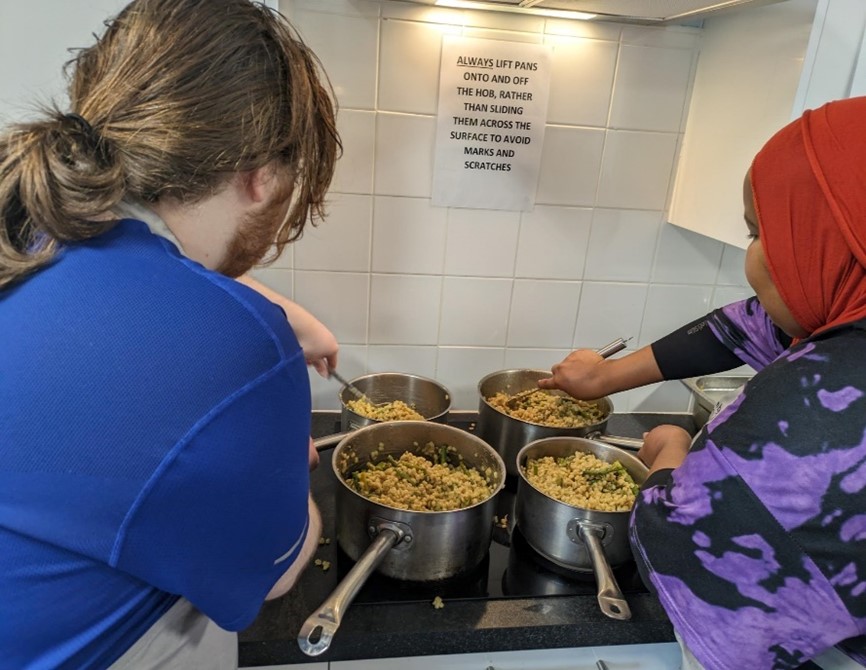
Written by Deborah Condie, Children’s / Locality Services Manager, Action for Children
Action for Children has worked with children and families for over 150 years and our vision is that “every child and young person in the country has a safe and happy childhood and the foundations they need to thrive”.
Our employability services provide young people with the guidance they need to identify their career aspirations and to take the first steps towards achieving those goals. Through the funding provided by the UK Shared Prosperity Fund in Edinburgh, Action for Children offers sector-based group courses in hospitality and construction and a general employability course called Aiming High with the option of one-to-one support if none of the group options are deemed suitable for the young person.
Aiming High offers information on a variety of different career routes through working with experts in different sectors, as well as covering transferable employability skills, for those who are not yet sure what career path they wish to take.
Irrespective of which course a young person is attending, each one is treated as an individual. A personal assessment is completed at the start of their involvement with us, and a 6-month aftercare programme is provided to offer support during their next steps toward sustained employment.
Whilst gaining qualifications and making positive progress are the main reasons for young people being referred to us, the softer interpersonal and social skills that they develop are just as important in enabling them to take the next steps towards gaining and sustaining employment and realising their aspirations.
Charlie’s Story
Charlie was a care-experienced young person referred to us b his school. He was referred with the intention of gaining employability skills and qualifications to enable him to move on to employment. Charlie faced some personal challenges during his time at school which had an effect on his learning and in turn this impacted on his confidence and belief that he could gain and sustain a job.
The Aiming High course that Charlie attended allowed him to gain more confidence and to form ideas on what occupational area he would like to move into. After completing the Aiming High course Charlie identified a sector-based course he wanted to attend. Charlie achieved an SVQ Level 4 award, a Rehis Health and Safety certificate and a number of vocational certificates.
Charlie applied for jobs with support from staff and was delighted to receive a job offer. Initially, Charlie was reticent to take up the offer of employment as he wasn’t sure he was ready, however with much encouragement from staff he accepted the offer and has now been in employment for over 3 months.
Client’s name changed.
If you would like to find out more about the courses we run at Action for Children please don’t hesitate to contact us at De************@*******************rg.uk
Written by Stephanie Carney, Youth Development Lead, The Prince’s Trust
Kyle was unemployed before his work coach at the Job Centre told him about the Prince’s Trust retail course in partnership with BP. He is now embarking on a career with BP and is excited for his future with the company.
Kyle had never been in paid employment and was looking for something to do after he wrapped up his volunteer work for Cancer Research UK in January 2023. He had been applying for lots of jobs, however, he had rarely heard back and for those he did hear back from, he hadn’t been successful in the interview stage.
“My mental health wasn’t the best it could have been, I had a lot of self-doubt and self-esteem issues when it came to my abilities and what I could actually do.”
However, when his work coach stumbled upon a Prince’s Trust advertisement, Kyle came along to meet with an Edinburgh Youth Development Lead and went through the BP induction process, progressing onto the Taster Day. When Kyle got accepted onto the programme, he was ecstatic.
During the course, he loved that the Prince’s Trust was there throughout to check if he was doing okay and really appreciated the support and guidance he got from BP during the work experience.
“I felt like it was actually way more helpful to get the experience and get to know everyone in the store ahead of the interview as they had already spent time with me. Not only that but the work experience itself helped me formulate what I was going to say in the interview!”
“When it comes to job interviews normally, you go in, and they ask you a bunch of questions, but you don’t really know them as a person, and they don’t really know me. That wasn’t the case with this course!”
When the course finished, Kyle was successful in securing a permanent position with BP after a fantastic job interview.
“Getting to learn new things and work alongside people really helped my confidence! The future, for me, is looking pretty good.”
Kyle is looking forward to seeing what’s next for him at BP.
“If anyone was thinking about doing this course in the future, I’d say go for it! No questions asked. It helped me so much and I’ve now got a lot of confidence in myself. It’s an absolute no brainer.”
The Prince’s Trust work in Edinburgh is funded through the UK Shared Prosperity Fund. To find out more about the Get Into courses visit the Princes Trust website.
Written by Rachel Nanson, Project Worker, Barnardo’s
Barnardo’s Works supports young people and their families towards secure independent and sustainable employment, study or further training. Services are available throughout Edinburgh and Midlothian to 15 – 29 year-olds applying for college or looking for a job or apprenticeship. There are a variety of group and tailored individual programmes that help young people gain valuable life and work skills, qualifications and practical work experience. This also extends to parents or carers, to provide a more extensive family package.
Jack is a young person currently engaging with the Barnardo’s Works Best programme in Edinburgh, which is funded by the UK Shared Prosperity Fund. Jack has weekly one-to-one support meetings with his project worker Nicola. During the sessions, Jack identified that some hands-on work experience could give him the edge in job applications and furnish him with some additional practical skills.
At the beginning of this year, Barnardo’s Employer Liaison Officer Dawn Parkes made great links with the LBM Dept Q Ltd in Leith. Together, they identified opportunities for Barnardo’s young people to get involved in numerous departments across the production of the TV series, including lighting, set building, and running. Jack attended a set visit where he was given a tour of the gigantic studio and shown inside all the meticulously built rooms and sets. He was introduced to a handful of the crew and learned all about the health and safety responsibilities on set.
Following his introduction, Jack spent five days working in the construction department helping to build and create the film sets. He was sworn to secrecy by signing a Non-Disclosure Agreement (NDA) so he couldn’t tell us much more than that about the production itself! However, we do know that he developed lots of fantastic skills, learning from the experienced joinery team there. Jack travelled a long way to get the studio every day, arriving with an upbeat smile and ready to work hard. His supervisors were very impressed with his contributions and his dedication. He made great links with people working in the industry and gained professional advice. He was also encouraged to work towards his CSCS card to be eligible for other opportunities in the construction industry.
After completing this placement, Jack’s confidence has increased, and he is currently participating in a week-long work trial which may lead to a full-time job. Other young people supported by Barnardo’s have been able to participate in work experiences across the TV production and have really flourished during their time there. The Barnardo’s team are very grateful to the LBM Dept Q Ltd. team for giving them these transformational opportunities.
You can find out more about Barnardo’s Works in the East of Scotland here.

Written by Georgina Bowyer, UKSPF Grants Manager with case studies written by Stella Farrell and Steven Campbell, Service Managers at CHAI.
Within the City of Edinburgh there are a variety of much-needed and well-used advice services serving different areas of the city and focussing on a breadth of issues. These include problems with accessing benefits, concerns around housing, relationship problems and legal issues including those relating to asylum claims. It is advice services that often meet people at a point of crisis in their lives, when finding or understanding the right information can be a pivotal point in their essential wellbeing.
In recent months, a new Edinburgh Advice Network has been established, facilitating further connections and a joined-up approach across the sector. Advice organisations are funded through a variety of local authority and government sources, and part of the current funding landscape in Edinburgh is the UK Shared Prosperity Fund (UKSPF) which supports the Community Help and Advice Initiative (CHAI). In this blog, we are pleased to share some short case studies from CHAI’s work which highlight the crucial nature of such services. Names have been changed to protect the privacy of the individuals. To find out more about the Edinburgh Advice Network, you can contact Jo Baldock at jo************@********************ip.org.
Katie’s Story
Katie is a 16-year-old student who was referred to the CHAI Advice In Schools Service by the Pupil Wellbeing Team at her High School. She had been staying with relatives following a relationship breakdown with her mother. She had no income of her own, so the school requested a benefit check for her. The school was also concerned about what might happen to Katie if the arrangements with her relatives broke down. Katie expressed a desire to stay on at school and continue with her education but also talked about getting a job to gain more independence.
Katie attended one of the weekly advice sessions that CHAI offers at her school to see if she would be entitled to any assistance. This area of advice can be quite complex, as most 16-18 year-olds are not eligible for Universal Credit. However, there are some exceptions to the rule if the young person is doing a course of non-advanced education and is 'without parental support' or a person 'acting in place of a parent'. After exploring this issue, the CHAI Adviser helped Katie apply for Universal Credit under the criteria relating to her specific circumstances. Katie’s claim for Universal Credit was successful, resulting in her receiving a monthly award of £293.11 and a financial gain of £3,517 per year.
Katie also asked about the process of applying for council housing and wanted to know if she was eligible to do so. The Advice Worker assisted Katie in completing an Edindex application and referred her for a homelessness assessment at Edinburgh City Council because Katie’s relatives had indicated that her stay with them would be temporary. Katie was awarded silver priority for homelessness and is on a waiting list to move to supported accommodation, although she continues to stay with her relatives for the time being.
Receiving help from CHAI meant that Katie gained some financial independence and did not need to look for work immediately. She was also relieved to know that she is entitled to homelessness assistance if she can no longer stay with her relatives. Katie was keen to stay on in education but might have been more likely to leave school if she hadn’t received this support and assistance from CHAI which has provided her with some income and a housing safety net if she needs it in the future.
Alice’s Story
Alice is 27 and is married with 3 dependent children that she no longer has access to. Alice and her partner are currently sofa surfing, staying with her mother-in-law. She suffers from anxiety and depression, drug-induced psychosis, possible PTSD, possible OCD, and dyslexia. Alice was referred to CHAI for help with her benefits, in particular her Universal Credit (UC) which had been sanctioned due to her missing an appointment, which meant that she had no money at all from UC.
The staff member phoned UC to apply for a mandatory reconsideration (MR) to lift the sanction. The staff member explained that Alice’s health makes it very hard for her to engage with people and attend appointments and that she is not currently able to work due to her health. As a result, the sanction was removed and due to what had been explained, she was later found not to be fit to work. This means that she now receives an additional £390 per month from UC.
CHAI then helped Alice apply for Adult Disability Payment, which is pending a decision. Alice found permanent accommodation and had some questions about the rent being paid through benefits. The staff member phoned her housing officer and made sure that the rent was being paid. The rent was not being paid by UC as the property had an extra bedroom, so the staff member asked for a Discretionary Housing Payment to be put in place.
The CHAI staff member who worked with Alice said: “When I first met Alice, she was really struggling with her mental health and money problems were having a big impact on her. Following the support she was more stable and less anxious than before. This is thanks to a combination of support services and the fact that Alice was able to move into permanent accommodation. The help provided by CHAI in getting her finances sorted out made a significant difference”.
To read more about the work of CHAI in Edinburgh you can visit CHAI (chaiedinburgh.org.uk).

Written by Lucy Gallivan and Anja Kirchhof
The Making Work Work programme is run by the Challenges Group and funded by the UK Shared Prosperity Fund. Making Work Work supports women returning to the labour market, often following a career break due to caring responsibilities. The programme includes sessions about building confidence, encouraging participants to envision the ideal work-life blend and exploring what flexible working means, where to find it, and how to ask for it. Alongside this, there are management and leadership skills refresher sessions and employability training around topics such as job applications, giving presentations and networking.
Lucy joined the Making Work Work programme in mid-2023 not knowing where to start looking for work after a long career break, and unsure how to juggle work and family commitments. The programme provided just what she needed to make the transition back into work. Following the programme, Lucy’s applications led to two successful interviews, leaving her to choose the best option. She joined the Competition and Markets Authority (CMA) as an economist on a part-time contract. CMA offered her a job suiting her previous career path, providing return-to-work support, and the flexibility she needed around family. Lucy shares some more details of her story here.
Lucy’s Story
By the time I returned to work last September, I was almost 46 and had been out of work for nearly 13 years. My four children were aged between 6 and 14 and we have no family nearby for support. My husband also has spells where he travels a lot for work, adding to the childcare challenge.
I have been fortunate to return to work on a flexible returners programme at the CMA, going back into work at the same level I left at. I work part-time, 18 hours a week, which are spread over school hours from Monday to Thursday. I work from the office for around half of my working days. The return to work has been a big transition for me, but a supportive employer has been a great help. I have been given access to a mentor, lots of training, and I have regular catch-ups with other women in the organisation who have also taken time out of the workplace in the past. Through a combination of training and on-the-job learning, I am refreshing my economics knowledge, learning about the organisation, and doing interesting and meaningful work.
Regarding childcare, my children are all school-age, and my working hours are all within school time. We use an after-school club for the youngest two children one day a week which gives me flexibility for making appointments or doing extra work when it is particularly busy. The trickiest times for us to cover are school holidays and when the children are off sick. These times are covered by my husband being able to work from home, holiday clubs where available, and taking annual leave where necessary. It is also possible for me to switch my hours around during the holidays which is very useful as I can condense hours into fewer working days.
The main challenge has been dealing with my confidence in the work environment. However, when I feel like I am doing a good job I really enjoy it and am delighted to be back at work. In terms of my experience with Making Work Work, I found it a very safe space to explore what is possible, to gain confidence and get my head back into the mindset of work. The programme offered invaluable emotional and practical support which is given generously. It also focused my mind on achieving a flexible work/life balance - it made me realise that it is possible and gave me the tools to get it.
To find out more visit the Making Work Work Facebook page.
For those interested in flexible working, also see the Flexible Working Scotland Facebook page.

Written by Lee Briggs, Business Gateway Outreach Advisor
Business Gateway Edinburgh offers free support to new and existing businesses in Edinburgh. Experienced business advisers can help those starting a business, and those looking to find new ways of doing business. As well as one-to-one support, Business Gateway offers free local workshops and seminars, including start-up sessions and specific skills events covering topics such as marketing, finance, and e-commerce. The team offers information on all aspects of starting and growing a business.
Business Gateway in Edinburgh is receiving additional funding from the UK Shared Prosperity Fund for two years. The additional work aims to increase the number of high-value start-up businesses; increase start-up numbers from previously underrepresented groups; and support first-time exporters to enter new markets. Between April 2023 and March 2024, the team supported 323 businesses, gave 48 grants, and helped to create 44 new businesses in the city.
One individual that has benefitted is Kerrie. Kerrie submitted an online enquiry to Business Gateway in August 2023. She was thinking of starting her own cleaning business and wanted advice and support to discuss the process. She had always worked for others and had no experience of running her own business. Kerrie explained that she has dyslexia and requires support with information and documentation as well as extra time to process and understand things. It was agreed with Kerrie that support would go step-by-step and that she could let the advisor know if she didn’t understand something or if she required further explanations.
The Business Gateway team had regular support calls with Kerrie to help her produce a business plan, develop a strategy for growing her business, embed a customer care policy, explore relevant insurance and banking, and to support with HMRC and navigate registering as self-employed. As part of the support package Kerrie was introduced to MS Teams for the first time. She enjoyed learning about this and was soon sharing documents on screen with the team as she applied feedback to her documents.
Kerrie successfully registered as self-employed and - after gentle encouragement, she attempted to start securing clients. Kerrie required reassurance and encouragement in these early stages but picked things up quickly. Her honesty and transparency became very apparent - Kerrie had always been a hard-working individual and the team helped her to realise that clients would appreciate her openness and positive attitude. They encouraged her to look at competitor pricing and not to sell her cleaning services too cheaply as she would give a better service than most of these other companies.
In September 2023, the team encouraged and supported Kerrie with an application for Business Gateway UKSPF start-up grant. She successfully secured a £1,000 award. During regular catch-ups with Kerrie, she reported to her advisor that the business was going from strength to strength. Her client list was expanding, and she had secured commercial customers as well as more domestic clients. As the year went on, the support Kerrie required was reduced as she began to demonstrate a new confidence and self-assurance.
Kerrie was grateful for the professional support she received, as well as the patience, understanding, and empathy that she experienced. This support enabled her to realise her dream and start her own business. Kerrie’s story is an excellent example of the impact that Business Gateway is having within Edinburgh as a result UKSPF funding. The funding enables the team to offer people a significant stepping stone in their journey, making it possible for them to grow and improve new businesses in the city.

Written By Georgina Bowyer, UKSPF Grants Manager
Partnership working is a crucial component in Edinburgh’s busy and vibrant third sector. With such a broad menu of projects and services, the landscape can sometimes be confusing and difficult to navigate. In fact, in Edinburgh, we often refer to the widely coined “no wrong door” approach whereby an individual approaching a service can be smoothly signposted to relevant organisations, even if the first one isn’t quite the right match. Knowing and understanding what other services have to offer, and working together where helpful not only increases efficiency but often unlocks additional benefits for individuals and communities. In the context of the UK Shared Prosperity Fund (UKSPF) programme, organisations across the differing themes have been encouraged to connect and understand each other’s work. One particularly productive partnership that has formed is between Cyrenians Cook School and Networking Key Services (NKS).
The Cyrenians Cook School provides support for people on low incomes to budget, plan and cook low-cost nutritious meals. NKS deliver holistic support for those from South-Asian communities, including empowering women to increase their social networks and enable them to access services in their local community. As a result of additional capacity in the Cook School through UKSPF funding, Cyrenians have run two elementary food hygiene courses for NKS clients this year. The courses are accredited by the Royal Environmental Health Institute of Scotland (REHIS). Participants have built confidence in handling and processing food that will be served to others, and it is hoped that going forward individuals will use their new skills to access both paid employment and/or volunteering opportunities.
Access to educational opportunities is sometimes difficult when English is not your first language, but the Cyrenians team are skilled at navigating this having run several courses for non-English speakers in the past, including that they were able to book interpreters for the NKS course sessions. This was a huge boost for the participants, enabling them to fully engage with the content. Sue O’Neill-Berest from Cyrenians said:
“Educational opportunities such as the food hygiene course we offer are important for building social capital within communities by building individual self-confidence and esteem. Many of those who complete a food hygiene course go into employment or volunteering opportunities in organisations and businesses across Edinburgh, positively impacting the local economy.
We were enthusiastic to partner with NKS because we know from experience that a successful partnership will always have a greater impact than working alone. Partnerships build and foster trust relationships that are then leveraged to provide enhanced benefits for service users from both services.”
Going forward, NKS and Cyrenians hope to work together on similar initiatives that advance their shared aims of empowering people to overcome barriers, improving their wellbeing, and supporting them to consider potential options for work, training and education. It has been encouraging to see such a positive example of partnership working through UKSPF, just one example of the many meaningful collaborations working to improve people’s lives across the city.

Written by Jessie Colligan, UKSPF Programme Administrator
UKSPF funding is now supporting a partnership between the Edinburgh Chamber of Commerce and Everyone’s Edinburgh to launch the Edinburgh B Corp 500 project.
The long-term goal is to assist 500 local businesses in their journey towards achieving B Corp certification by 2030. With a focus on purpose-driven practices, the partnership aims to pave the way for future generations, offering meaningful employment opportunities while enhancing business impact within the Edinburgh community. They want every organisation in the city to get involved and B the change.
A B Corp, also known as a Benefit Corporation, is a business independently verified by B Lab. It is a sign of recognition that your business is committed to social and environmental responsibility. By meeting B Lab’s rigorous standards, B Corp businesses attract like-minded customers, access to funding, and stand out in the market. Ultimately, being a B Corp allows companies to make a positive impact while maintaining transparency and accountability.
With over 1,900 B Corps in the UK and 8,500 worldwide, B Corps are at the forefront of a global movement to use business as a force for good. Scottish B Corps make up over 5% of the UK B Corp community, with 45 of those based in Edinburgh.
UKSPF funding supports the launch and initial activity of the Edinburgh B Corp 500 in its first year. Any companies interested in joining the training and support cohort can find information on the application process at the Edinburgh Chamber of Commerce website.

Written By Myles Seaton, MacMillan Skills Hub Manager
MacMillan Skills Hub is a skills centre operating across the whole of Edinburgh through a mixture of in-person and online support. Our base is currently within Muirhouse Millennium Centre, situated in the Northwest of Edinburgh with plans to move into the new Muirhouse Hub in Spring 2024. We are in a community that has faced high levels of unemployment and currently undergoing a regeneration project which is seeing increasing numbers of people and employers coming to the area. It is vital to have a service like ours in an area that is undergoing significant changes.
Our support is targeted at both unemployed individuals and those seeking career changes, the latter being underserved in Edinburgh currently. We run several workshops to build individuals' confidence along with Vocational Training Frameworks that deliver specific sector-based learning with opportunities to secure interviews upon completion of the course. One individual said:
“I want to take this opportunity to express my gratitude for the support I received during my training. Your guidance and assistance have truly helped me in my job search. I can confidently say that your organisation played a significant role in my successful employment at Queen Elizabeth House.”
Employer engagement is key to the support we offer. We work with businesses to support people with barriers to employment and link clients to opportunities through Community Jobs Fairs and established business relationships.
As part of the regeneration of the North of Edinburgh, there is a focus on Green Skills and how businesses transition towards Net Zero. Within the local community, we look to assist businesses in finding the resources and training needed to work towards these aims. Through the UKSPF funding we will deliver Green Skills Academies to support individuals in understanding the industry, learn new skills, and connect with Green Skills focused employers.
The future of Green Skills looks very positive within the North of Edinburgh. We have recently secured additional UKSPF funding to work with employers coming to the new Forth Green Freeport in Leith. The Freeport development will create many job opportunities for local individuals and create expansion opportunities for businesses. With a focus on Green Skills many employers are looking at upskilling staff and the Edinburgh College Granton Campus has a specialised Retrofit Training Centre to support local employers and has added modules within their apprenticeship programmes to ensure individuals are ready to start a career within the industry.
Visit the MacMillan Skills Hub website here.
Written by Zoe Brownlee, UK Shared Prosperity Fund Programme Officer
UKSPF funding is now contributing to tackling climate change and the journey to Net Zero on a regional scale. Two projects are already underway having kicked off in the latter half of 2023, and further work was approved at the end of last year. Utilising existing partnerships created through the Edinburgh and South East Scotland City Region Deal, the projects will address major environmental challenges, pooling together the resources and expertise available across the region. The Edinburgh and South East Scotland City Region includes East Lothian, Edinburgh, Fife, Midlothian, Scottish Borders and West Lothian Councils.
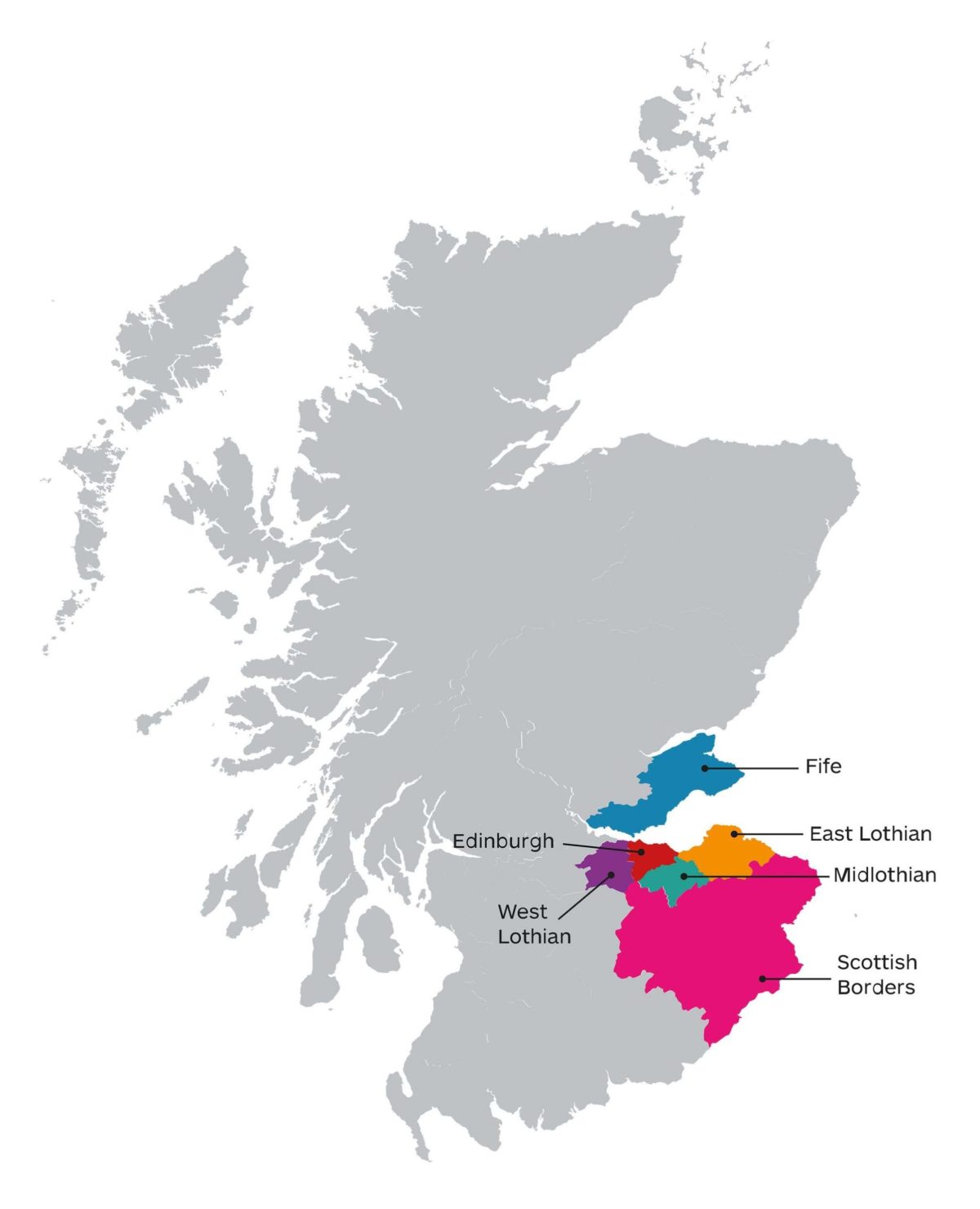
The projects are a product of the Regional Prosperity Framework (RPF), an ambitious 20-year vision to help shape public and private investment to develop the regional economy. The RPF delivery plan includes four key programme areas including Green Regeneration, Infrastructure for Recovery and Prosperity, Visitor Economy and Culture and Data Driven Innovation (DDI) Economy.
The first project is part of The Regional Net Zero Accelerator Hub, led by West Lothian College and includes a feasibility study undertaking the initial preparation, skills mapping, and planning for a Net Zero Accelerator Hub (NZAH). Supply-side work is being undertaken at West Lothian, Scottish Borders, Edinburgh, and Fife Colleges. Architectural plans will be produced, and the University of Edinburgh will provide a demand analysis based on the expected Net Zero activity taking place in the six Local Authorities in the City Region Deal area.
The second project is the Regional Climate Risk & Opportunity Assessment, led by Sniffer, an organisation that exists to facilitate collaboration on climate matters. Sniffer will provide detailed evidence of climate risks and an economic assessment of risks and extensive public engagement. The assessment will enable the six local authority partners to identify priority actions to address climate risks. Read more on the sniffer website.
Another regional project focusing on Visitor Economy is in the final stages of development which will benefit from UKSPF funding followed by others including an Energy Masterplan which are in the earlier stages of development.
It is hoped that the work will lay the foundations for a collaborative approach to tackling climate change and building greener futures in the region going forward. To find out more about the City Region Deal and Regional Prosperity Framework visit the website.

Written by Sue O’Neill-Berest, Cyrenians Food Education Manager.
Cyrenians work across Scotland to tackle the consequences of homelessness. They recognise that there are numerous obstacles to homelessness and that there is no ‘one size fits all’ approach to supporting people toward more positive and stable futures.
The UK Shared Prosperity Fund in Edinburgh supports three Cyrenians initiatives in the city. Each of these sits within the Good Food Programme. Fareshare is a food redistribution project providing surplus food from the food industry to around 20,000 individuals and families a week. Flavour & Haver Cook School provides support for people on low incomes to budget, plan, and cook low-cost nutritious meals. Cyrenians run community pantries, which are a dignified alternative to food banks providing families with nutritious food at a minimal cost.
Cyrenians are also involved in a lottery-funded UK-wide project with the Brighton & Hove Food Partnership (BHFP). The team has been collaborating with Brighton & Hove Partnership and Fareshare to create dehydrated vegetables and fruit in a new piece of kit named Dora the Dehydrator. BHFP has developed, tested, and refined processing of vegetables close to ending up in landfills and dehydrating them.
The UKSPF-funded Cook School is right next door to FareShare and therefore able to intercept vegetables at source before they end up in the compost bin. FareShare works hard to distribute excess vegetables, but due to the sheer volume and how they are packaged, some deteriorate before they can redistribute them. With BHFP guidance and partnership funding the team was able to buy a dehydrator and get it up and running.

The UKSPF-funded Cook School is right next door to FareShare and therefore able to intercept vegetables at source before they end up in the compost bin. FareShare works hard to distribute excess vegetables, but due to the sheer volume and how they are packaged, some deteriorate before they can redistribute them. With BHFP guidance and partnership funding the team was able to buy a dehydrator and get it up and running.
The project now has weekly chop and chat sessions to fill up Dora the Dehydrator and vacuum pack previously dehydrated vegetables and fruit. Volunteers gain new and innovative skills; engage in meaningful activity in their local community; chat with others; have a meal together and take some food home. The dehydrated vegetables are then used for their slow cooker sessions and there are plans to make them available to the pantries running across Edinburgh, the Lothians, and Borders as stew and/or soup packs.
Dehydrators are incredibly useful in preserving food long past their shelf life. Creating delicious snacks, soups, and stews whilst minimising food waste by using surplus vegetables. This not only helps in reducing food waste but also contributes to the broader goal of reducing the environmental impact of surplus food. Fresh fruit and vegetables are expensive and not always made available in food parcels. The team is looking at whether this could be a potential solution to increase the micronutrient content of food parcels.
Last year the project created mixed fruit packs that will be used during breakfast week in their upcoming 6-week cooking classes for the granola that class participants make. They have also been using their dried cherry tomatoes in frittatas for their lunch club at Heart of Newhaven and in turkey curry that will served at the Bethany Welcome hub.
The team said the knowledge, expertise, and support that partnerships and funders have given us have been invaluable in running this project. It's a testament to the importance of collaboration between experienced partners, allowing a streamlined process with success in achieving our goals.
Written by Fiona Hunter, Destination Marketing and Contracts Manager: Forever Edinburgh
Forever Edinburgh, a team located with the City of Edinburgh Council, is tasked with promoting the city on a national and international stage. Working closely with private tourism businesses and public agencies, they work to ensure that visitors experience the very best of Edinburgh.
In August 2023, Forever Edinburgh launched an expanded programme of Resident Rewards with a hyper-local marketing campaign funded by the UK Shared Prosperity Fund. The initiative aims to encourage the city’s residents to engage with Edinburgh’s cultural and leisure offerings and to generate year-round increased spend and support for the city’s tourism, hospitality, and leisure businesses.
The development of the programme was in response to one of the key strategic priorities of Edinburgh’s 2030 Tourism Strategy: that tourism development in the city should benefit “Our people” - the residents of Edinburgh. The original concept launched in 2021 and offered Edinburgh residents one high-value offer from a different tourism business in the city each month. Examples included 50% off with Edinburgh Bus Tours (January 2021) and 40% off Johnnie Walker Princes Street's Journey of Flavour experience (May 2021).
A targeted campaign promoted the monthly ‘Star Reward’, ensuring those eligible were reached. A promotional film was created to raise awareness of the initiative, and a dedicated webpage was created on edinburgh.org. Residents redeemed the reward by using a promotional code. As well as driving local demand for participating partners, other benefits included brand exposure through the campaign, increased local advocacy, and raised product awareness and engagement.
The programme was expanded in August 2023 due to the campaign's success and additional funding, with four new reward categories joining the monthly Star Reward.
Monthly STAR Reward: Continuing to deliver the successful high-value monthly reward, offering one high-value reward from one new business each month.
Resident RATES: Residents are given year-round preferential rates to enjoy Edinburgh's attractions, tours, and leisure products.
Resident PREVIEWS: Like a press or media launch, partnering businesses invite residents to the launch of their new events, exhibitions, and openings. As this is reliant on the city’s annual event programme, this will not be an ‘always on’ reward.
Resident HALF PRICE and FREE Days: On a quiet day in the month, residents get to enjoy a selection of attractions, tours, and experiences for free. This may be for a limited period on a certain day in the month or bi-monthly.
Resident ANNUAL PASS: When you buy an entry ticket, you get unlimited access for 12 months. This encourages residents to make repeat visits (shorter but more frequent trips) and bring their paying friends and family at no additional cost to the resident.
The Forever Edinburgh team first surveyed residents for their opinions. This generated around 300 local responses. The results highlighted strong levels of awareness within the market (55%) and that most residents are frequently enjoying Edinburgh’s cultural offerings (70%). When asked how likely they would be to use each of the five different reward categories, between 71-93% of respondents said they were either highly interested / would use or were interested in / likely to use all five Rewards, with ‘Resident Rates’ proving most popular at 93%.
The following testimonials from some of the businesses that took part:
“Taking part in the Residents Reward was a great success for Camera Obscura & World of Illusions. We were delighted to welcome just under 700 local children free during March 2023, which contributed to a 56% overall rise in children visiting compared to March 2022 and 33% of our total visitors were from Edinburgh and Lothians, up 16% on 2022. “
“We were delighted to participate in Forever Edinburgh’s Resident Reward Scheme. It was an excellent opportunity for Surgeons Quarter to promote a dining experience at Ten Hill Place Hotel to local residents. The uptake of our offer exceeded our expectations resulting in additional business for our restaurant during January – a month when transient food and beverage spend is typically low.”
To date, the Resident Rewards Edinburgh website has been viewed 325,000 times and has made 22,000 referrals to participating partners. Within the first six months of 2023, the programme had exceeded the volume of tickets sold and delivered 130% of the value of the entire 2022 programme. Building on this success, and with enhanced funding from the UK Shared Prosperity Fund, Forever Edinburgh are looking forward to continually growing and refining the programme for the mutual benefit of Edinburgh residents and businesses.
Find out more at: www.edinburgh.org/residentrewards
Get the latest news direct to your inbox
Copyright © 2025 | The Edinburgh Local Employability Partnership
